








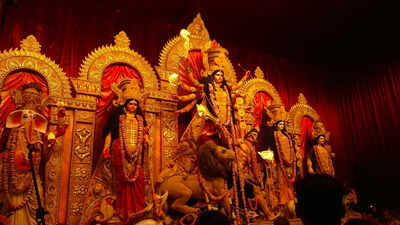
Long before the first beat of the dhak, a Durga Pujo has already been decided, priced and partly built. The goddess arrives in autumn, but the people who bring her to a neighbourhood start months earlier, with a theme, a budget and a list of permissions that must be collected one office at a time.To the crowds who walk through a pandal’s gates, a pujo is a few days of colour, light and sound. To the club that puts it up, it is a yearly project that runs on money raised from the neighbourhood, a small circle of skilled craftsmen and a large number of people who all have to be in the right place on the right day. In West Bengal that project is repeated in locality after locality, each with its own ledger.
The quiet work before the dhak
The ledger is not small. A medium-scale pujo costs several lakh rupees, and the biggest share does not go to the idol at the centre of it all. It goes to the structure built around her. Most visitors never see the figures, the deadlines or the people behind them, and that is exactly how the organisers want it. A pujo is meant to arrive as a finished thing.The budgetNirmal, a pujo organiser from West Bengal who has run one for the past 10 years, knows that ledger well. “A medium scale pujo in West Bengal would cost somewhere between 10 to 15 lakhs,” he says. “Every year the budget increases as per the market inflation.”That second sentence matters as much as the first. A committee that spent a certain amount last year should expect to spend more this year on the same pujo, before it adds a single new ambition. For a club working with money collected from its neighbours, the target keeps moving upward, and the neighbours are asked to keep up with it.
The pandal takes the biggest share
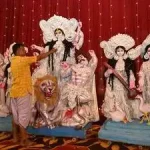
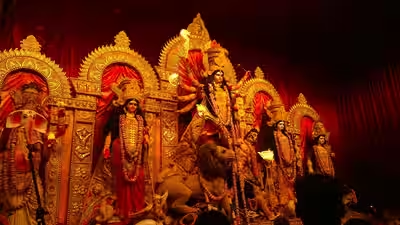
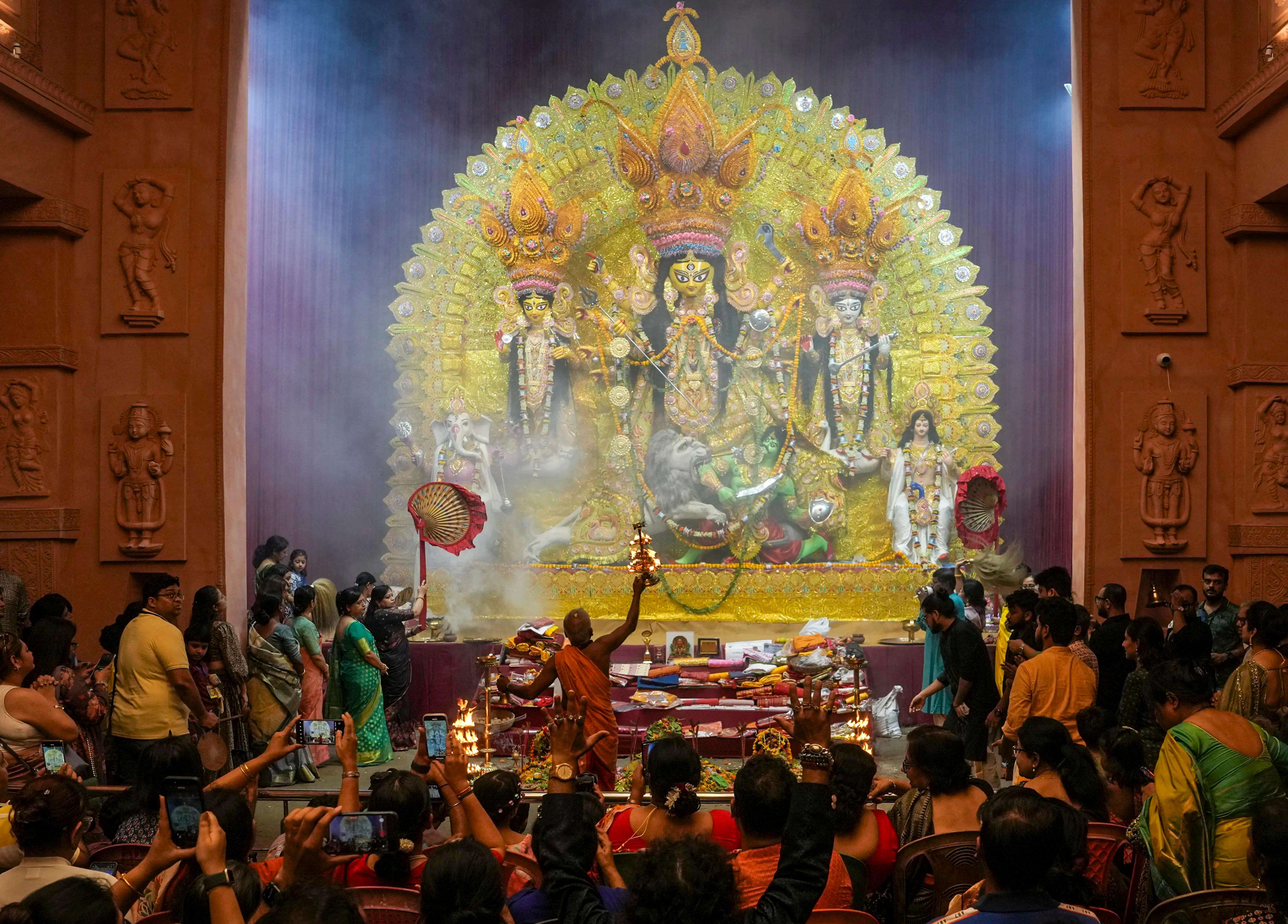
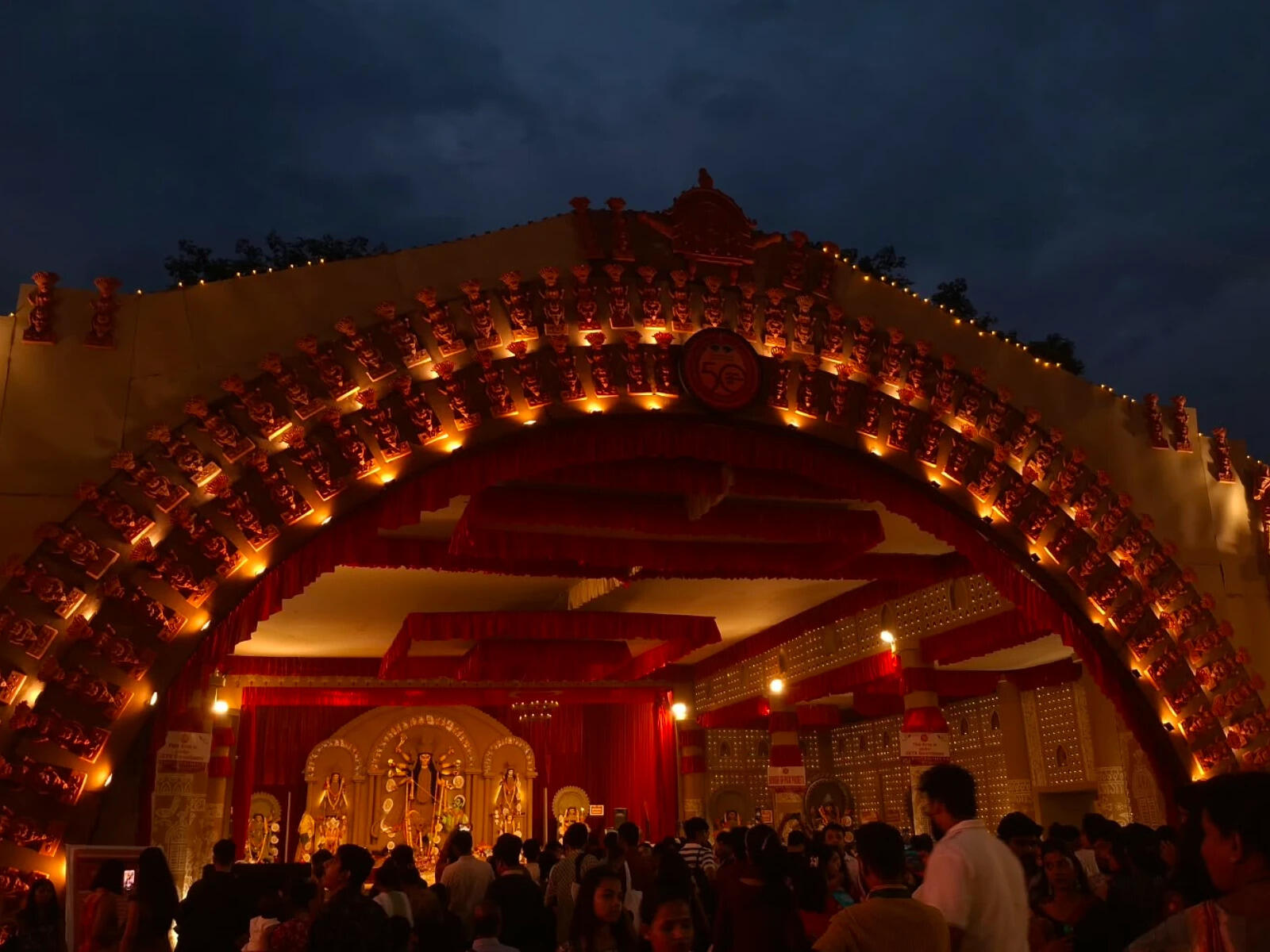
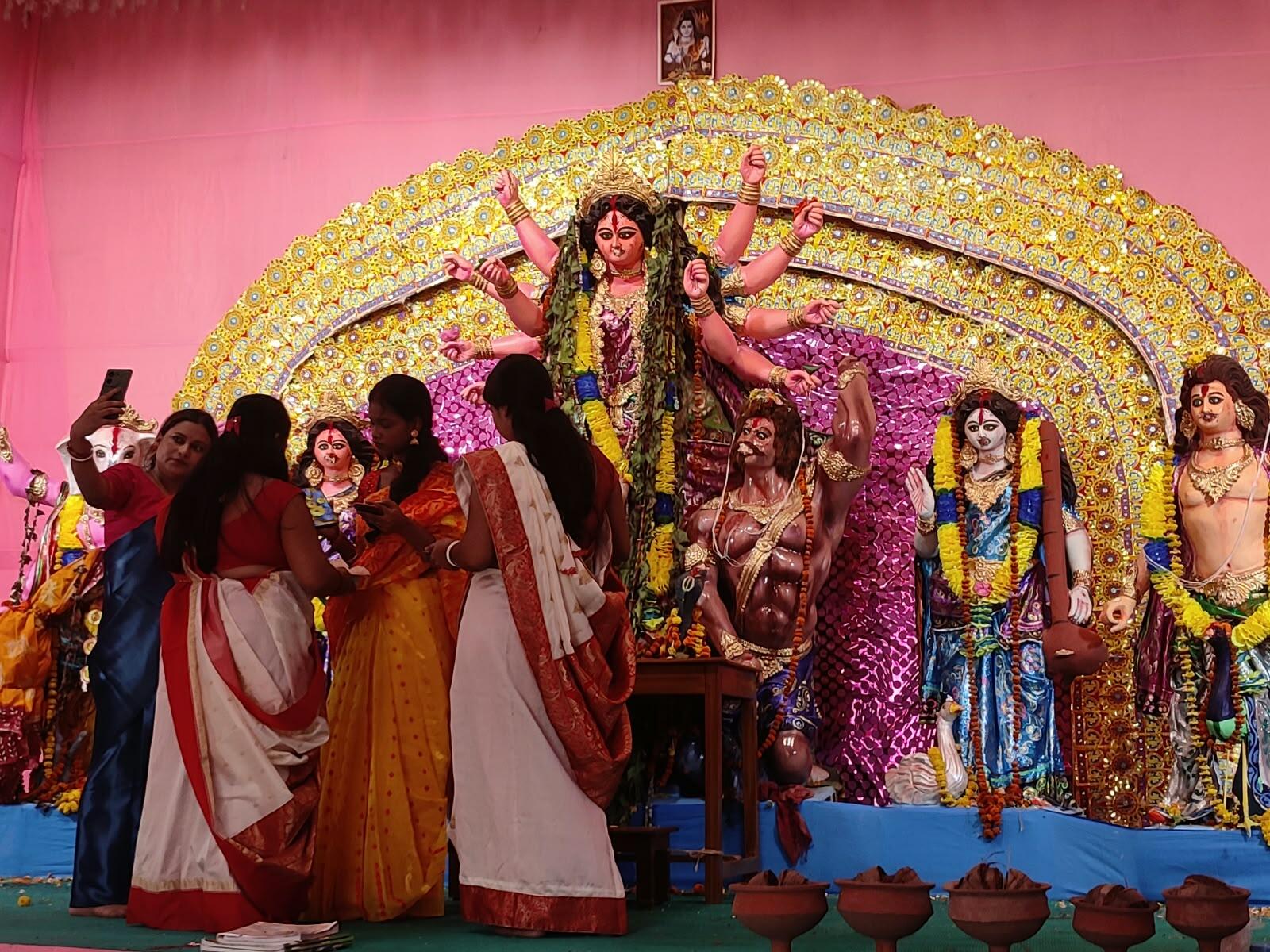
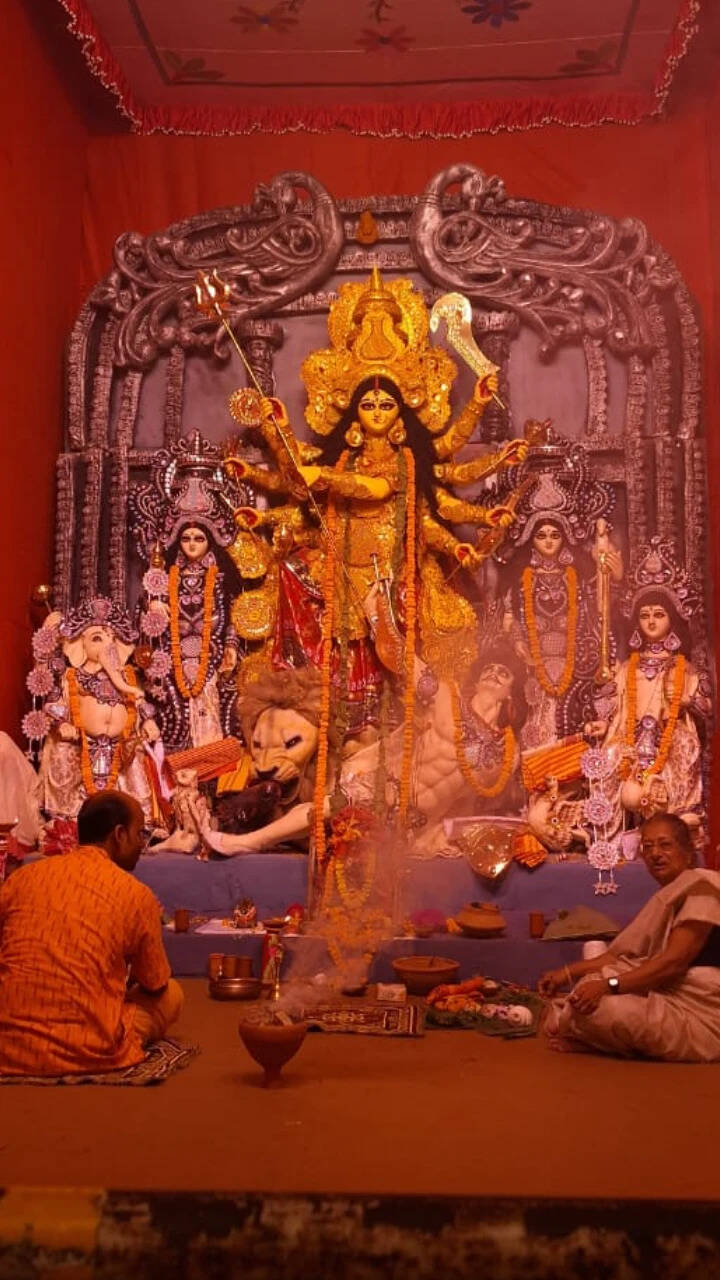
Ask him what costs the most and the answer is immediate. “The pandal costs the most,” he says. Not the lighting, not the idol, not the food. He puts the pandal at around Rs 3 lakh to Rs 5 lakh for a medium-scale pujo, which makes it the line the rest of the budget has to work around.The idol costs a fifthNext to the pandal, the idol is a modest line. “Whatever the pandal costs, the idol costs its one-fifth,” Nirmal says. For a medium-scale pujo, that works out to around Rs 80,000.It is a striking ratio. The figure at the heart of the festival, the one every visitor has come to see, costs a fraction of the structure that shelters her.Within the idol’s cost, the most expensive element is gold. Certain gold items are designated for it, among them an ornament that is given by the club organising the pujo. The ornament comes from the organisers themselves, which makes it a different kind of expense from the rest.A theme, decided half a year earlyA pandal needs a theme, and the theme needs time. “The theme is decided at least six months ago,” Nirmal says, meaning at least six months before the pujo. That is a long lead for a festival that lasts only days.Who decides it varies. In some committees, he says, there is a specific person whose sole job is deciding the theme. In others, the pandal makers can decide it too. The choice matters for more than looks, because the budget is also decided through the theme. Once the idea is fixed, the cost of building it can be worked out, and the money follows.This is why the calendar starts so early. A theme chosen six months out leaves room to price the work, find the right artisan and settle the budget before construction begins. By the time the neighbourhood sees the first bamboo go up, the important decisions have already been made.Two months, or moreConstruction is where the calendar turns uncertain. Asked how long a medium-scale pandal takes to build, Nirmal is candid. “It depends on the workers, to be honest,” he says. “Some can build the same pandal in two months, whereas some will require more time.”
Six months, one theme, lakhs of rupees
The reason, as he describes it, is a shortage of skill. “The skilled pandal makers are not a lot in number. Mostly there is just one skilled artisan and a lot of people work under him.”That structure explains a good deal. The quality of the pandal and the speed at which it rises rest heavily on one person, with a large crew following his lead. For an organiser, choosing a pandal maker is therefore as much a scheduling decision as a financial one. A maker who is slow, or one who is booked elsewhere, can put the whole timeline at risk.Where the money comes fromThe funding model is local. “Every area or colony has a designated club which builds a pandal,” Nirmal explains. “And then they get chanda, donations, advertisements that ultimately make the pujo what it is.”There is also help from the state. This year, he says, the West Bengal government is providing Rs 1 lakh to small-scale pujos, and electricity is completely free. Free power removes a bill that would otherwise sit beside the lighting and the pandal. The Rs 1 lakh grant, though, is meant for small-scale pujos. Set against a medium-scale budget of Rs 10 lakh to Rs 15 lakh, most of the money still has to come from the neighbourhood, from donors and from advertisers.The people who are paidSome costs are smaller but just as fixed. The priest’s expenditure, Nirmal says, is around Rs 30,000 to Rs 40,000. The dhaki, whose drumming is as much a part of the pujo as the idol, is paid around Rs 10,000. On top of that, he gets free food, lodging and clothes.
What it costs to raise a Durga Pujo
Those extras are part of the arrangement. A dhaki who is housed and fed for the duration of the pujo is a cost the committee carries beyond the headline fee. Nirmal was also asked about bhog expenditure, but his answer covered only the priest and the dhaki.What the numbers leave outAdd up the lines Nirmal named, the pandal, the idol, the priest and the dhaki, and the total lands somewhere between roughly Rs 4.2 lakh and Rs 6.3 lakh. His estimate for the whole pujo is Rs 10 lakh to Rs 15 lakh.The gap is considerable. It covers everything else a pujo needs, including the lighting and food he named only to rule them out as the biggest expense. Nirmal did not break down how that money is divided.
Share your thoughts in the comments
Be respectful · TOI community guidelines
Everything, from beginning to endAsked about the biggest challenge organisers face, Nirmal does not name a single expense. “The biggest challenge is that everything from the beginning to the end is completed properly,” he says.
Do you think the cost of a medium-scale Durga Puja should be capped to keep it accessible?
3k+ users shared opinion today
5k+ users already voted today
3k+ users shared opinion today
That includes permissions. “You have to get proper permissions like the police and the fire department,” he says, “and it takes a lot of people to complete a pujo and to make a pujo what it is.”The pandal maker and his crew, the artisan working on the idol, the priest, the dhaki and the club members collecting funds are all working towards the same date. Seen this way, the Rs 10 lakh to Rs 15 lakh is only part of what a pujo demands. The rest is coordination, and much of Nirmal’s decade in the job has gone into it.For the people who walk through the gates, the pujo arrives as a finished thing. For the club behind it, it began at least six months earlier with a decision about a theme, and it will begin again next year at a higher cost.