









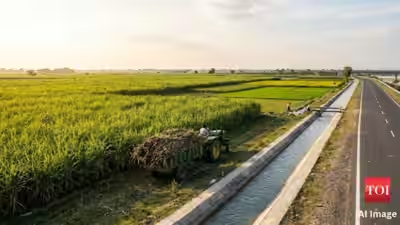
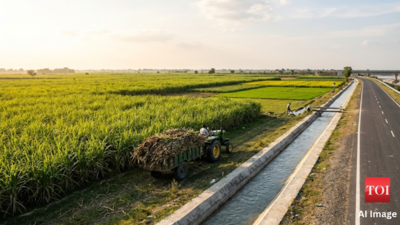
Lakhimpur Kheri, the largest district in Uttar Pradesh in terms of land area, has long been recognised as a major centre of the state’s Terai sugar belt. Blessed with fertile soil and extensive water resources, the region’s primary economic activity has historically been sugarcane cultivation. However, before 2017, the district faced several systemic challenges, including sugar mill closures, mounting cane dues, low-yield monoculture farming and inadequate rural infrastructure.Since Chief Minister Yogi Adityanath took office in 2017, Lakhimpur Kheri has witnessed changes in its socio-economic landscape. The state government has focused on industrial reforms, agricultural diversification and rural infrastructure development, seeking to strengthen the district’s agricultural economy and promote rural development.Before the current administration took office, sugarcane farming in Lakhimpur Kheri faced challenges related to delayed mill payments, putting financial pressure on farmers. The Yogi Adityanath government has sought to improve payment mechanisms and introduce technology-backed transparency into the cane allocation system. Digital platforms have enabled farmers to receive information directly and improved transparency in transactions. These measures have sought to strengthen confidence among cane growers and encourage investment in better farming practices, improved planting material and modern irrigation systems.The government has also sought to expand the use of sugarcane beyond conventional sugar production by aligning the sector with the national biofuel programme. Sugarcane is increasingly being used as a raw material for ethanol production. Distilleries attached to integrated sugar mills across the district have contributed to the expansion of this sector, creating additional economic opportunities.In a significant development, the foundation stone was laid for the country’s first large-scale integrated biopolymer plant at the Kumbhi Sugar Mill Complex, operated by Balrampur Chini Mills, in Lakhimpur Kheri. With a proposed investment of more than Rs 2,850 crore, the facility is intended to use locally grown sugarcane to produce biodegradable PLA-based bioplastics under a zero-liquid-discharge framework.Meanwhile, local Krishi Vigyan Kendras have promoted improved agricultural practices, including the trench-pit method of sugarcane cultivation. The method is intended to improve productivity, although the claim that it has nearly doubled yields from 300 quintals per acre to more than 550 quintals per acre requires independent verification.Recognising that excessive dependence on a single crop can expose farmers to market fluctuations and ecological pressures, the state government has also promoted agricultural diversification. This includes encouraging the cultivation of pulses and oilseeds, such as mustard, lentils, urad and moong, alongside sugarcane through suitable intercropping practices.Intercropping can help farmers diversify their income sources and reduce their dependence on a single crop. It can also improve the use of land and other farm resources while helping small and marginal farmers manage seasonal income fluctuations.Furthermore, banana cultivation, including varieties such as G9 and Cadila, has expanded in parts of Lakhimpur Kheri. Bananas can provide farmers with an additional source of income and help manage seasonal cash-flow challenges. Under rural development initiatives, self-help groups have also explored extracting fibre from banana stems. The fibre can be used in various products, creating opportunities for rural enterprises and women’s employment. However, the reported selling price of up to ₹20,000 per quintal requires verification.Additionally, under the One District One Product (ODOP) scheme, the government has supported traditional industries through measures such as financial assistance, modern toolkits and market access. Such initiatives can help jaggery-making units improve production, expand their markets and develop commercially viable businesses.Agricultural growth requires reliable infrastructure. The state government has undertaken road development projects aimed at connecting remote villages in Lakhimpur Kheri with regional markets and economic centres. Projects involving the strengthening of the Lakhipur-Maigalganj to Dhakaiya corridor and the construction of all-weather cement-concrete roads leading to sugar factory cane yards, including the Sampurnanagar unit, are intended to improve the movement of agricultural produce and reduce transportation constraints. The extent of the improvements and their impact on logistics costs require verification.To address the water requirements of sugarcane and diversified crops, the administration has also focused on irrigation infrastructure, including drip irrigation systems and the modernisation of local canals. Such measures can improve water-use efficiency and help conserve groundwater, although claims about the expansion of the net irrigated area and the volume of groundwater conserved require supporting data.In an effort to strengthen connectivity and promote tourism, the state government has also considered infrastructure projects aimed at improving Lakhimpur Kheri’s accessibility. The proposed development of an airport in the district is intended to improve connectivity for investors, agricultural professionals and tourists visiting the Dudhwa Tiger Reserve. The project’s current status and expected operational timeline should be confirmed before publication.Alongside these initiatives, religious tourism projects, including the Gola Gokarannath Shiv Mandir Corridor, have been promoted to improve visitor facilities and support local hospitality and service businesses.The impact of these interventions extends beyond farms and factories. Better roads, improved connectivity, agricultural diversification and expanding rural enterprises can create employment opportunities, particularly for women and young people. The links between agriculture, food processing, bio-based industries, tourism and rural services can help build a broader local economic ecosystem and reduce dependence on traditional agricultural income alone.The ongoing changes in Lakhimpur Kheri illustrate how agricultural modernisation, crop diversification and infrastructure development can influence a rural economy. Efforts to strengthen the sugarcane industry, encourage high-value crops and improve rural connectivity could help address longstanding economic challenges. Sustaining this progress will depend on timely payments to farmers, reliable infrastructure, efficient water management, viable markets and the creation of sustainable employment opportunities.