












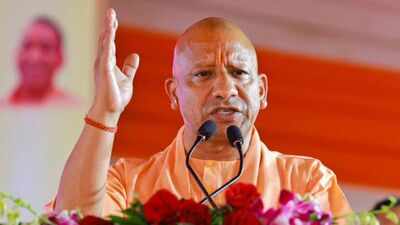
A 215% increase in the prison department’s budget, new district jails, expanded capacity and technology-driven administration mark a major push to strengthen the state’s correctional infrastructure.Uttar Pradesh has undertaken a major overhaul of its prison system over the past nine and a half years, with the state government focusing on infrastructure development, modernisation, security and improved administrative facilities. Under Chief Minister Yogi Adityanath, more than Rs 17,000 crore has been spent on the prison department during this period, reflecting a sustained effort to strengthen an institution that plays a crucial role in the criminal justice system.The transformation is significant not merely because of the scale of financial investment but also because of the growing emphasis on prison capacity, modern infrastructure and the adoption of technology. As the state works towards strengthening its law-enforcement machinery, prison modernisation has emerged as an important component of efforts to improve public safety and make the criminal justice system more effective.The increase in the prison department’s budget illustrates the scale of this change. From Rs 913.07 crore in the financial year 2017-18, the allocation rose to Rs 2,877.58 crore in 2026-27, registering an increase of approximately 215%. The expanded financial support has created greater scope for infrastructure development, the construction of new district jails and the improvement of existing prison facilities.
A substantial increase in financial support
The prison department’s budgetary growth provides an indication of the priority accorded to the sector. In 2017-18, the department received Rs 913.07 crore. By 2026-27, the allocation had increased to Rs 2,877.58 crore, more than tripling over the period.The cumulative allocations also demonstrate the change in the scale of government support. Between 2017-18 and 2021-22, the prison department received a total budget allocation of Rs 5,494.41 crore. In contrast, the allocations for the five financial years from 2022-23 to 2026-27 amounted to Rs 11,913.53 crore.The latter period therefore accounts for more than twice the cumulative allocation of the preceding five-year period. This increase has provided a stronger financial foundation for the expansion and modernisation of the state’s prison infrastructure.The more than Rs 17,000 crore reportedly spent on the prison system over the past nine and a half years represents a substantial public investment in an area that often receives less attention than policing and other visible aspects of law enforcement. Prison infrastructure, however, is an essential part of the criminal justice system. Secure and adequately equipped correctional facilities are necessary for the lawful custody of inmates, effective prison administration and the maintenance of institutional discipline.The larger allocation also creates an opportunity to address longstanding infrastructure requirements, including the need for additional accommodation, improved facilities and more efficient administrative arrangements.
New district jails to expand capacity
One of the most important components of the modernisation drive is the construction of new district jails. The state has initiated projects in several districts to expand accommodation capacity and develop infrastructure suited to contemporary administrative and security requirements.According to information released by the prison department, construction is under way in six districts, with individual projects involving investments of hundreds of crores of rupees. Amethi is witnessing the construction of a district jail at a cost of Rs 176.12 crore. In Mahoba, the project has been valued at Rs 203.42 crore, while the new district jail in Hathras is being built at an estimated cost of Rs 184.94 crore.Kushinagar has been allocated a project worth Rs 228.31 crore, making it the most expensive among the six ongoing jail construction projects listed in the announcement. In Jaunpur, the construction cost is Rs 179.79 crore, while Hapur’s district jail project is valued at Rs 190.08 crore. Taken together, these six projects represent a planned investment of approximately Rs 1,162.66 crore in new district prison infrastructure.The projects are expected to contribute to the expansion of the state’s custodial capacity and improve the geographical distribution of prison facilities. The availability of suitable infrastructure is particularly important for prison administration, as overcrowding and inadequate accommodation can place pressure on sanitation, healthcare, security and other essential services.New facilities, when completed and made operational, can help the department manage inmates more effectively and provide an opportunity to incorporate modern design, security arrangements and administrative systems from the outset.The construction programme also has a wider infrastructure dimension. Large public projects require construction materials, engineering services, labour and associated supplies, generating economic activity during implementation. However, the principal long-term objective remains the creation of secure, functional and adequately equipped correctional facilities.
Land acquisition for future prison projects
Alongside the construction of new jails, the government has begun preparing the ground for additional projects through land acquisition and related administrative approvals. This is an important stage in expanding prison infrastructure. The identification and acquisition of suitable land, followed by the preparation of project plans and construction, determine how quickly new facilities can be developed.The government has sanctioned funds for land acquisition for proposed prisons in six more districts: Sambhal, Shamli, Ballia, Saharanpur, Amroha and Chandauli. For Sambhal, Rs 24.56 crore has been approved for land acquisition. Shamli has received an approval of Rs 96.20 crore, while Rs 24.12 crore has been sanctioned for Ballia. The approved amount for Saharanpur stands at Rs 50.87 crore. Amroha has been allocated Rs 32.28 crore for land acquisition, and Chandauli has received an approval of Rs 34.27 crore.The total of these six land-related approvals is approximately Rs 262.30 crore.These approvals indicate that the prison expansion programme extends beyond projects already under construction. By advancing the land acquisition process, the government is preparing the groundwork for further development of the state’s correctional infrastructure. The next stages will involve completing the necessary land-related formalities, finalising project requirements and moving towards construction, subject to the requisite administrative and financial approvals.The distinction between an ongoing construction project and a proposed jail for which land acquisition funds have been sanctioned is important. While the former represents active infrastructure development, the latter reflects preparatory progress towards a future facility.Nevertheless, the parallel focus on construction and land acquisition suggests a longer-term approach to expanding the prison network rather than relying exclusively on improvements to existing establishments.
Modern infrastructure and technology-driven administration
The prison modernisation programme is being pursued through three broad priorities: infrastructure development, expansion of capacity, and the strengthening of security and administrative systems through modern technology. The construction of new district jails provides the physical foundation for this effort.Modern prison management, however, also requires effective monitoring, reliable communication, accurate record-keeping and systems that help officials manage inmates and institutional operations.Technology can support these objectives through appropriate surveillance systems, controlled access, digital records and improved monitoring of prison premises. Such measures can help strengthen security and improve administrative efficiency when implemented effectively.The government’s stated emphasis on modern technology and security reflects the changing requirements of prison administration. Correctional institutions must prevent escapes, unauthorised access, contraband movement and other security breaches while ensuring that lawful procedures are followed.At the same time, modernisation should extend beyond the physical security of prison premises. Effective prison administration also depends on trained personnel, transparent procedures, timely access to healthcare, adequate sanitation and educational and vocational opportunities for inmates.Although the information released by the department highlights investment in infrastructure and technology, a comprehensive assessment of outcomes would also require district-wise data on prison occupancy, staffing, healthcare facilities, digital security systems and rehabilitation programmes.The scale of the investment nevertheless provides an expanded financial base for the department to strengthen these essential functions.
Prisons as an integral part of law and order
The condition of prisons is closely connected with the overall effectiveness of the criminal justice system. Police agencies are responsible for investigating offences and maintaining public order, courts determine legal responsibility, and prisons ensure the secure custody of individuals committed to them under lawful authority.Weak infrastructure at the custodial stage can undermine the effectiveness of the broader system. Inadequate accommodation, outdated facilities and limited administrative capacity can create difficulties for both prison officials and inmates.By directing substantial resources towards prison development, the Uttar Pradesh government is seeking to strengthen this often-overlooked component of public administration.The increase in the department’s budget also signals a recognition that prison management requires sustained investment rather than occasional spending on repairs or emergency requirements. New construction, infrastructure maintenance, technology upgrades and personnel-related needs all require long-term financial planning.The expansion programme across districts also has the potential to improve access to prison facilities and support more organised administration. Its eventual impact will depend on the timely completion of projects, adequate staffing, regular maintenance and the effective use of the infrastructure being created.
Security must go hand in hand with rehabilitation
Modern prison administration is not limited to confinement and security. Correctional institutions also have a responsibility to prepare eligible inmates for their eventual return to society.Education, vocational training, counselling, skill development and opportunities for productive engagement can contribute to rehabilitation and reduce the risk of reoffending. Adequate living conditions, healthcare and access to legal processes are equally important to ensuring that custody is administered lawfully and humanely.As Uttar Pradesh invests in new facilities and modern systems, integrating these correctional objectives can help ensure that infrastructure development delivers benefits beyond physical capacity.Technology can also support more systematic record management and monitoring, while better-designed facilities can make it easier to organise healthcare, educational and vocational services. These outcomes, however, require appropriate staffing, operational planning and sustained attention to the needs of inmates.The broader measure of success will therefore lie not only in the amount spent or the number of new facilities constructed, but also in whether prisons become safer, better managed and more effective in supporting rehabilitation.
A long-term investment in correctional infrastructure
Uttar Pradesh’s prison modernisation programme represents a substantial expansion of public investment in custodial infrastructure. More than Rs 17,000 crore in expenditure over approximately nine and a half years, a 215% increase in the department’s budget and a series of new district jail projects together indicate the scale of the government’s intervention.The six ongoing construction projects, valued at approximately Rs 1,162.66 crore, are intended to add to the state’s prison infrastructure. Meanwhile, land acquisition approvals worth around Rs 262.30 crore for six proposed facilities point towards the next phase of expansion.These figures mark important stages in a broader programme, although the ultimate results will depend on project completion, operational readiness and improvements in the day-to-day functioning of prisons.The government’s emphasis on infrastructure, modernisation and technology reflects the view that effective law enforcement requires a strong correctional system alongside capable policing and judicial institutions.As the new facilities take shape and existing systems are strengthened, the challenge will be to translate increased spending into measurable improvements in security, capacity, administration and rehabilitation. If accompanied by effective implementation and sustained oversight, the investment can help establish a more modern, secure and efficient prison system in Uttar Pradesh.