











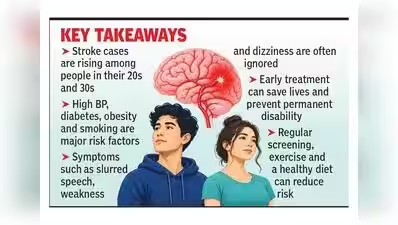
Lucknow: When 32-year-old private executive Akashy Yadav’s speech began slurring and he felt weakness in the right arm and difficulty in maintaining balance, he dismissed the symptoms as stress and exhaustion. His family rushed him to King George’s Medical University, where doctors diagnosed a stroke. Prompt treatment prevented serious disability, but neurologists say many young patients ignore early warning signs and lose valuable time.Such cases are becoming increasingly common. Once seen largely as an old-age disease, stroke is now affecting people in their 20s and 30s. Doctors attribute the trend to unhealthy lifestyles, rising diabetes and hypertension and poor awareness of symptoms.Ahead of World Stroke Day (Oct 29), neurologists warned that delays in treatment can be devastating. Stroke occurs when blood flow to the brain is interrupted by a blockage or bleeding and every minute of delay raises the risk of brain damage.Neuro-interventional radiology consultant at ApolloMedics Hospital, Dr Dewansh Mishra, said, “We are seeing stroke cases in people aged 24 and 28, which were rare earlier. Children are also showing stroke-like symptoms. Nearly three out of every 10 young patients visiting our OPD had ignored early signs of a stroke.”Doctors say lifestyle diseases are a major reason strokes are occurring at younger ages. Uncontrolled diabetes and high blood pressure damage blood vessels, while obesity, insulin resistance, smoking and substance abuse increase risk further.Medanta Hospital’s director of neurology, Dr Anup Kumar Thacker, said early detection and treatment of high blood pressure and diabetes are the most effective ways to prevent strokes.At Max Super Speciality Hospital, young adults account for nearly 10-15% of stroke patients, according to consultant neurologist Dr Pooja Tripathi.“Along with lifestyle factors such as lack of exercise, inadequate sleep and substance abuse, we are also seeing strokes caused by heart conditions that allow blood clots to travel to the brain, injuries to blood vessels in the neck and inherited disorders that increase clotting risks,” she said.Doctors added that some genetic conditions can weaken brain blood vessels and cause bleeding. In women, smoking during the course of oral contraceptive pills can further increase stroke risk.Symptoms Mistaken for StressExperts say many young people fail to recognise warning signs. Symptoms usually appear suddenly and include weakness or numbness on one side of the body, facial drooping, difficulty lifting an arm, slurred speech, trouble understanding others, blurred or double vision, dizziness, loss of balance and severe headaches.Doctors cautioned that symptoms disappearing within minutes should not be ignored. They may indicate a transient ischaemic attack (TIA), or mini-stroke, which often precedes a major stroke. “Any sudden neurological problem, even if it lasts only a few minutes, should be treated as an emergency,” Dr Tripathi said.“Any sudden neurological problem, even if it lasts only a few minutes, should be treated as an emergency,” Dr Tripathi said.Race Against TimeNeurologists emphasised that stroke treatment is highly time-sensitive. Patients suffering a stroke caused by a blocked artery can benefit from treatments that restore blood flow to the brain, but only if they reach hospital within the recommended treatment window. Doctors urge people to seek immediate medical attention rather than wait for symptoms to pass.Lifestyle Changes Make a DifferenceMax Super Speciality Hospital clinical nutritionist and head of dietetics, Saima Faruqi, said frequent consumption of fried snacks, sugary drinks, sweets, salty foods and refined-flour products contributes to obesity, diabetes, high cholesterol and hypertension.“A balanced diet with whole grains, pulses, vegetables, fruits and curd, along with less salt, sugar and oil, can help reduce these risks,” she said. She recommended at least 150 minutes of moderate exercise every week, seven to eight hours of sleep daily, stress management and avoiding prolonged sitting. Doctors also advised regular screening of blood pressure, blood sugar and cholesterol. For Indians, diabetes screening should begin at age 35, or earlier for those with additional risk factors.She recommended at least 150 minutes of moderate exercise every week, seven to eight hours of sleep daily, stress management and avoiding prolonged sitting. Doctors also advised regular screening of blood pressure, blood sugar and cholesterol. For Indians, diabetes screening should begin at age 35, or earlier for those with additional risk factors.