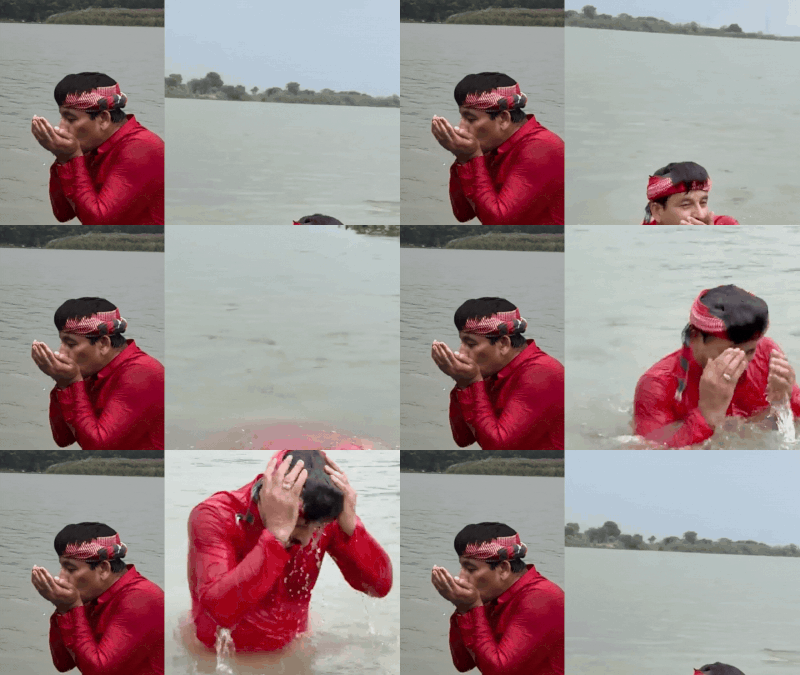










New Delhi: Ahead of Chhath Puja, BJP MP Manoj Tiwari Thursday took a dip and swam in the Yamuna at Sonia Vihar, praising the work undertaken to clean the river under the leadership of CM Rekha Gupta.Tiwari, who represents North East Delhi, said he was “overjoyed” the work had made it possible for him to enter the river. He credited PM Modi and Gupta, saying the objective was to provide a clean Yamuna to Delhi residents.“How can we not appreciate the work that has been done here? I will tell Arvind Kejriwal that this is all a sign of cleanliness. There might be crocodiles in the water here, but crocodiles come in clean water,” Tiwari said, adding his visit was intended to send a message, not aimed at shaming Kejriwal.Responding to Tiwari, AAP said its karyakartas had visited the Yamuna and exposed BJP’s false claims. According to a party worker, the water at the site was black and heavily polluted. The workers said Tiwari had taken a dip during the Yamuna Ghat cleaning drive and his claim that he was drinking the river water was “completely false”.AAP alleged Tiwari was from Purvanchal and was “staging theatrics” as Chhath was approaching. Issuing an open challenge to him, it said, “Take a dip where the drain water flows into the Yamuna, drink the water and livestream the entire exercise for the public across all your social media accounts. People elected Manoj Tiwari as their MP because they trusted him, but he is trying to mislead the people of Delhi.”As per DPCC’s latest report for Sept, the monsoon rain received by Delhi this year failed to improve Yamuna’s water quality. Several monitoring points recorded higher pollution in Sept 2026 than Sept 2025. While river stretch between Palla where it enters the city and Wazirabad barrage, where Tiwari took the dip, is comparatively cleaner and within standards, its downstream Wazirabad barrage, post the confluence of Najafgarh drain, is heavily polluted.The DPCC report said at Palla, biochemical oxygen demand (BOD) is 2mg/l, dissolved oxygen 6.5mg/l and fecal coliform 1,100 MPN/100ml — all within standards. However, downstream Wazirabad, at ISBT Bridge, the Sept 7 sample recorded BOD of 30 mg/l, compared with 8 mg/l on Sept 3 last year. Chemical oxygen demand (COD) rose from 44 mg/l to 92 mg/l over the same period. The fecal coliform count increased from 2,800 to 35,000. At ITO Bridge, BOD climbed from 4 mg/l to 18 mg/l, while COD rose from 20 mg/l to 60 mg/l. Fecal coliform levels increased from 1,800 to 17,000 MPN/100 ml.A BOD limit of 3 mg/l or less and dissolved oxygen of at least 5 mg/l are specified for bathing. For fecal coliform, the desirable limit is 500 MPN/100 ml, with 2,500 MPN/100 ml as the maximum permissible level.During festivals like Chhath, stretch between Palla and Wazirabad gets a booster of fresh water from Hathini Kund barrage, flushing the pollutants out. However, the stretch is not immune to pollution. In Oct second week, visuals of hundreds of dead fish and many more gasping for oxygen in Yamuna upstream of Wazirabad raised fresh concerns over the river’s pollution levels. Experts held industrial effluents from Haryana responsible for that.The Yamuna’s condition becomes a major political flashpoint every year ahead of Chhath, when devotees enter the river for rituals amid concerns over sewage pollution and toxic foam. In Oct 2024, then Delhi BJP president Virendra Sachdeva had taken a dip in the Yamuna at ITO to target the then AAP govt over the river’s condition.