



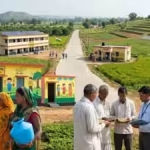


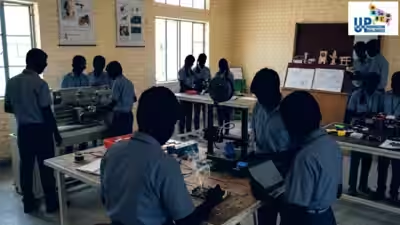
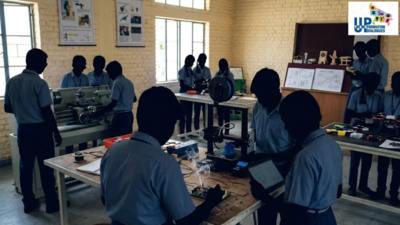
The expansion of Project Praveen is aligned with the Yogi government’s broader emphasis on improving employability, promoting entrepreneurship and building a skilled workforce (Box).Under the leadership of Chief Minister Yogi Adityanath, Uttar Pradesh is giving a new direction to school education by integrating academic learning with practical skills, employability and entrepreneurship. Through Project Praveen, the state government is seeking to prepare students not merely to pass examinations but also to develop the capabilities, confidence and professional knowledge required to build sustainable livelihoods.Implemented by the Uttar Pradesh Skill Development Mission (UPSDM), Project Praveen represents an important step towards bringing vocational education closer to school students. The initiative seeks to bridge the gap between classroom learning and the demands of the employment market by introducing students to practical trades, digital technology, communication skills, financial awareness and the fundamentals of starting a business.The programme reflects the Yogi government’s broader development approach: education should become a foundation for economic independence, particularly for young people from rural, economically weaker and socially disadvantaged backgrounds. By introducing employment-oriented training during secondary education, the government aims to help students make informed career choices and access livelihood opportunities soon after completing Class 12.The expansion of Project Praveen during the 2026-27 financial year, including specialised modules on financial literacy and entrepreneurship, signals a move towards a more comprehensive model of school-based skill development.
From conventional education to employability
Many students and young people may possess academic qualifications but lack the technical, communication and financial skills needed to enter the workplace or establish a small enterprise. Project Praveen seeks to address this challenge by introducing vocational learning alongside the regular school curriculum. Students in Classes 9 to 12 receive training in selected employment-oriented trades, allowing them to explore practical occupations before leaving school.The underlying idea is to make skill development an integral part of education rather than an activity undertaken only after students have completed their academic studies. Early exposure to vocational training can help students understand different professions, recognise their interests and develop a clearer picture of the opportunities available to them.The programme also supports the objectives of the National Education Policy (NEP) 2020, which emphasises vocational education, practical learning and the removal of rigid divisions between academic and skill-based education. For Uttar Pradesh, which has a large young population and substantial differences in economic opportunities between districts, this approach has particular significance. Expanding access to practical skills through existing schools can help bring vocational education to students who might otherwise find it difficult to access specialised training institutions.
A statewide programme with ambitious targets
The Uttar Pradesh Skill Development Mission has set a target of providing skill development training to approximately two lakh students across 515 schools during the 2026-27 financial year. The programme covers a diverse network of educational institutions, including government secondary schools, aided schools, Kasturba Gandhi Balika Vidyalayas, Sarvodaya Vidyalayas and Atal Residential Schools established for children of labourers.This broad institutional coverage is important because it allows the benefits of skill development to reach students from different social and economic backgrounds. Rather than restricting vocational education to a small group of specialised institutions, Project Praveen uses the school network to extend its reach.Students receive training in demand-driven trades alongside their regular academic curriculum. The objective is to give them a foundation in practical work that can be developed further through employment, apprenticeships, advanced vocational courses or self-employment.The target of approximately two lakh students demonstrates the scale of the state’s ambition. However, the programme’s ultimate success will depend not simply on enrolment numbers but also on the quality of training, the relevance of the trades taught and the extent to which students are able to use their acquired skills after leaving school.
New opportunities for girls through skill training
One of the significant dimensions of Project Praveen is its focus on girls studying in Kasturba Gandhi Balika Vidyalayas (KGBVs), which provide educational opportunities to girls from disadvantaged communities. For the 2026-27 academic session, the Uttar Pradesh Skill Development Mission has set a target of training 2,672 girl students from 71 Kasturba schools.The initiative seeks to ensure that girls receive practical, employment-oriented skills alongside their formal education. Training areas include healthcare, IT and IT-enabled services, apparel, media and entertainment, and green jobs. Artificial intelligence, computer technology and soft skills are also important components of the programme. Green jobs can introduce students to emerging areas of economic activity.The programme also recognises that technical knowledge alone is insufficient for successful employment. Communication, personality development and workplace readiness are important for students entering professional environments for the first time. The maximum training duration has been fixed at 300 hours. Students are also required to complete an artificial intelligence course available through the Mission Portal or the YUVA AI for ALL initiative, as specified in the programme instructions.To ensure that training begins with the necessary learning resources, textbooks and study materials are to be provided within seven working days of the commencement of classes, with proof of distribution uploaded to the Mission Portal.The broader objective is to strengthen the confidence, capabilities and future economic independence of girls, particularly those who may face barriers to accessing employment-oriented education.
Financial literacy: Preparing students to manage money wisely
A major expansion announced on October 24, 2026, is the introduction of dedicated financial literacy training under Project Praveen. The UPSDM has signed memoranda of understanding with the National Stock Exchange of India Limited (NSE) and the National Institute for Entrepreneurship and Small Business Development (NIESBUD), an institution under the Union Ministry of Skill Development and Entrepreneurship.Under this arrangement, NSE will provide financial skills training, while NIESBUD will conduct entrepreneurship development training. Both modules are designed to be completed in two hours and have been introduced across the state from October 24, 2026.The financial literacy module seeks to give students a practical understanding of money management. It covers the importance of savings, the difference between needs and wants, budgeting and informed financial decision-making.These are essential life skills. Young people entering employment or starting a small business need to understand how to manage their earnings, plan expenditure and develop responsible financial habits. Basic financial awareness can also help them approach savings and investment decisions more carefully as they grow older.By introducing these concepts during school education, the government aims to establish a foundation for responsible financial behaviour before students begin earning independently. The emphasis is on practical understanding rather than turning schoolchildren into financial experts.Students are expected to develop the ability to make sensible decisions about money in their everyday lives and future careers.
Entrepreneurship training : From job seekers to job creators
The second new module focuses on entrepreneurship development, delivered in partnership with NIESBUD. Its purpose is to encourage students to look beyond conventional employment and consider how their skills might be used to establish small businesses or generate self-employment.The module introduces the process of identifying business ideas, recognising customer needs, understanding market opportunities and planning the use of available resources. Students are also introduced to problem-solving and project planning, which are essential elements of entrepreneurial thinking.The training has particular relevance because vocational skills can become the basis of small enterprises. A student trained in tailoring, for example, may eventually explore garment-making or alteration services. Someone with knowledge of electronics or information technology may consider repair services or digital support work, while training in beauty and wellness or automobiles may provide a foundation for service-based businesses.Such examples illustrate how technical proficiency can be connected with income generation. A trade becomes more economically useful when students also understand how to identify customers, manage costs and organise their work.The module is not intended to guarantee that every student will become an entrepreneur. Rather, it seeks to broaden their choices and help them understand that self-employment is a possible career pathway when supported by relevant skills, planning and resources.For young people in smaller towns and rural areas, where formal-sector employment opportunities may be limited, this exposure can be especially valuable. It may encourage students to identify local needs and explore viable services or businesses within their communities.
Combining technical, digital and life skills
Project Praveen’s broader training framework combines several elements that are necessary for workplace readiness. Students are already receiving 180 hours of technical trade training, 30 hours of soft skills training and four hours of artificial intelligence and digital skills training, according to the programme details provided by the Mission.The new financial literacy and entrepreneurship modules add two hours each to this stated training framework. Together, these components are intended to expose students to different aspects of professional and economic life. Technical training provides the occupational foundation; soft skills support communication and interaction; digital learning introduces students to technology; financial literacy builds money-management awareness; and entrepreneurship training encourages independent thinking and business planning.This integrated approach is important in a changing economy. Employers increasingly expect workers to combine occupational knowledge with communication, adaptability and the ability to work with digital tools. Similarly, individuals who choose self-employment need to understand not only how to perform a task but also how to organise and sustain an economic activity.Artificial intelligence is an important addition to this learning environment. Even at a foundational level, familiarity with AI and digital technology can help students understand emerging workplace trends and prepare for further learning.The government has also made the prescribed training curriculum and learning materials important elements of implementation. Detailed module outlines have been circulated to training providers, with instructions to incorporate both new modules into classroom training.The objective is to make vocational education more comprehensive, connecting practical occupational abilities with the wider capabilities required for employment and economic independence.
Quality control and time-bound implementation
The effectiveness of any skill development initiative depends on the quality of instruction and the relevance of the training provided. Project Praveen therefore includes administrative and monitoring measures intended to ensure that classes begin on schedule and students receive the prescribed training.For the special training programme covering 2,672 girls in 71 Kasturba schools, the approval of training centres, student registration and formation of batches are to be completed promptly. The instructions also require decisions on applications for approval of centres and batches to be taken within two working days of their receipt on the Mission Portal.Training is to follow the curriculum prescribed by the relevant Sector Skill Council and comply with the applicable NCVT and National Skills Qualifications Framework (NSQF) standards. Students will undergo assessment through the respective council after completing their training.District Programme Management Units will inspect training centres and available equipment every 15 days to monitor implementation. The Mission Director has also warned that punitive action will be taken against institutions that fail to start training on schedule or neglect quality requirements.These provisions establish a framework of accountability. Timely classes, adequate equipment, access to learning materials and credible assessment are all necessary if training is to translate into useful skills.
Reaching districts and expanding access
Project Praveen’s reach across Uttar Pradesh is reflected in the inclusion of Kasturba schools in districts such as Agra, Aligarh, Bareilly, Budaun, Bulandshahr, Chandauli, Etah, Farrukhabad, Fatehpur, Ghaziabad, Ghazipur, Gonda, Hardoi, Jaunpur, Jhansi, Kannauj, Lakhimpur Kheri, Lalitpur, Mainpuri, Mathura, Meerut, Mirzapur, Moradabad, Prayagraj, Sambhal, Shahjahanpur, Sitapur, Sonbhadra, Unnao and Varanasi.This geographical spread demonstrates the programme’s intention to take skill-based learning beyond major urban centres. Students in districts with different economic profiles can gain exposure to vocational education through their schools, reducing the need to depend entirely on distant training institutions.The inclusion of Kasturba Gandhi Balika Vidyalayas is particularly significant for girls whose access to further education and employment-oriented training may be constrained by economic and social circumstances. At the same time, the broader target of approximately two lakh students across 515 schools during 2026-27 creates the potential for a much wider transformation in how secondary education is delivered.
Supporting Uttar Pradesh’s wider development goals
Uttar Pradesh needs young people who can participate in manufacturing, services, technology, healthcare and emerging green industries. Developing these capabilities requires more than increasing access to education; it also requires equipping students with skills that respond to changing economic needs.Project Praveen contributes to this objective by introducing vocational learning at the school level. It can help students discover occupational interests early, reduce uncertainty about career options and create a foundation for advanced training.Its focus on entrepreneurship also complements the state’s efforts to promote self-employment and small businesses. When young people understand both a trade and the basic principles of managing money and identifying customers, they are better positioned to explore economic opportunities.
A pathway towards self-reliant youth
Project Praveen represents an important shift in the relationship between education and employment in Uttar Pradesh. It seeks to ensure that schooling prepares students not only for examinations and higher education but also for practical responsibilities, professional opportunities and independent livelihoods.The programme’s targets for 2026-27, its special training initiative for girls in 71 Kasturba schools, and the introduction of financial literacy and entrepreneurship modules demonstrate the government’s intention to expand the scope of vocational learning.For girls, the initiative offers an opportunity to combine education with technical competence and greater economic independence. For students more broadly, it introduces the foundations of workplace readiness, responsible money management and entrepreneurial thinking.The collaboration with NSE and NIESBUD brings specialised expertise into the school environment, while the prescribed curriculum, assessments and periodic inspections provide mechanisms to support implementation and quality.Under Chief Minister Yogi Adityanath’s leadership, Project Praveen is intended to make skill development a meaningful part of the educational journey. Its central promise is that young people should leave school with more than academic knowledge—with practical abilities, greater awareness of economic opportunities and a stronger foundation for self-reliance.By bringing education, vocational skills, financial awareness and entrepreneurship together, Uttar Pradesh is seeking to prepare its next generation for a future in which learning leads not only to qualifications but also to productive work, economic participation and greater independence.