











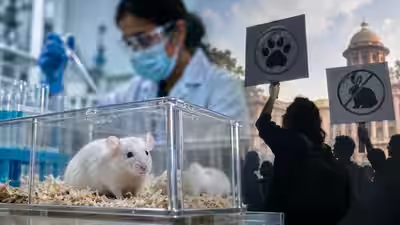
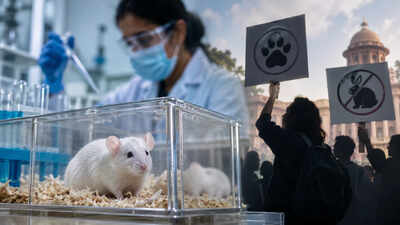
NEW DELHI: Animal testing remains an important part of pharmaceutical research, vaccine development and medical science in India. But a proposed overhaul of the rules governing laboratory experiments has triggered a debate over a fundamental question: Can India streamline scientific research without weakening safeguards for animals?The draft Prevention of Cruelty to Animals (Control and Supervision of Experiment, Breeding and Trading of Laboratory Animals) Rules, 2026, issued by the Committee for Control and Supervision of Experiments on Animals (CCSEA), proposes changes to how experiments are classified and approved. While it introduces a severity-based system for assessing animal suffering, animal welfare groups have raised concerns about reduced regulatory scrutiny, the use of certain animals and potential conflicts of interest in institutional approvals.The debate also comes at a time when advances in science are opening up alternatives to animal testing, including human cell-based studies, organoids, organ-on-chip technology and computer modelling. The question is whether India’s regulatory framework is keeping pace with these developments.What are the proposed rules1. Severity-Based Classification: Experiments are categorized into four levels based on expected pain or distress: Mild, Moderate, Severe, Non-recovery2. Decentralized Approvals: An establishment’s internal Institutional Animal Ethics Committee (IAEC) can directly approve mild and moderate experiments on any species. The central Committee for Control and Supervision of Experiments on Animals (CCSEA) retains approval authority for severe and non-recovery procedures, specifically for animals positioned above rodents and rabbits.3. Three Rs: Replacement, Reduction and Refinement. These involve using alternatives wherever possible, limiting the number of animals to what is scientifically necessary and improving procedures and care to minimise suffering.The proposed framework also lays down requirements for the registration of establishments, institutional ethics committees, veterinary supervision, trained personnel and animal-care facilities. Experiments may be undertaken for specified purposes, including basic and applied research, drug and food safety testing, disease research, environmental protection and species conservation.The sectors that use animals for researchAnimal experimentation is not limited to pharmaceutical companies. Dr Surat, Senior Program Director, Research and Toxicology Department, Humane World for Animals India, said it is carried out across pharmaceutical and biotechnology companies, medical research institutions, universities, veterinary colleges and government laboratories.Animals are used in vaccine development and batch testing, food and feed safety assessments, disease research and studies evaluating the effectiveness of potential treatments. Tests may assess short-term and long-term toxicity, skin and eye irritation, carcinogenicity and reproductive toxicity.Mice and rats are among the most commonly used laboratory animals, followed by rabbits, guinea pigs, fish and birds. Non-human primates are also used in certain areas of research.However, the scale of animal experimentation in India remains difficult to establish. Dr Surat said that although an estimated 100 million to more than 115 million animals are used in experiments and research worldwide every year, India does not have an official national figure or a transparent public database recording annual animal use, deaths and reported violations.Dr Ramanuj Panda, founder and managing director of Gocarin, has called for a centralised reporting system that records the species used, severity of experiments, animal deaths and welfare complaints.What existing law saysAnimal experimentation in India is governed by the Prevention of Cruelty to Animals Act, 1960. The law provides for the CCSEA to regulate experiments and ensure that animals are not subjected to unnecessary pain or suffering.Section 17 requires the committee to ensure that animals are not subjected to unnecessary pain or suffering before, during or after experiments. Section 18 authorises inspections of facilities and examination of relevant records. Section 19 allows the committee to prohibit experiments where the rules are not being followed, subject to the prescribed process.The proposed rules would change how approval responsibilities are distributed, particularly for experiments involving mild and moderate levels of suffering.Why are animal welfare groups concerned?One of the major concerns raised by animal welfare organisations relates to provisions allowing certain experiments involving protected wild animals, wild-caught animals and stray or feral domestic animals, subject to specified conditions and permissions.PETA India has flagged these provisions, arguing that capturing, handling, transporting and confining animals not bred for laboratory use can cause distress and disrupt their natural behaviour. It has also questioned the scientific reliability of using animals whose health, genetic background and environmental histories may be unknown.The organisation has raised concerns about the possibility of community dogs and cats being exposed to laboratory use. It has also referred to a CCSEA circular issued in 2022 that allowed the use of stray dogs in certain vaccine trials. The circular was withdrawn in 2023.Dr Noopur Jain, Science and Research Policy Advisor at PETA India, said: “India should be moving towards modern, human-relevant non-animal science, not making animal experimentation easier.”PETA has also argued that the severity of an experiment, rather than the size or species of the animal, should determine the level of regulatory scrutiny.Could changes to approvals weaken oversight?Beyond the use of animals, the proposed shift towards institutional approvals has raised questions about independence and potential conflicts of interest.Dr Surat said five of the nine members of an IAEC belong to the same establishment seeking approval for an experiment, raising concerns about how independent research proposals may be assessed.The concern is that institutions could approve mild and moderate experiments involving a wider range of species without prior CCSEA clearance. This makes the role of independent members, veterinary supervision and clear scientific justification particularly important.Panda said streamlining approvals should not come at the cost of animal welfare. He called for meaningful participation by independent members in IAEC decisions, mandatory veterinary supervision, documented scientific justification and external reviews for experiments involving greater levels of suffering.The draft provides for inspections by designated nominees, including a socially aware member, at least twice a year. Separately, CCSEA inspection teams can inspect facilities to verify compliance.Dr Surat said facilities also undergo physical inspections for fresh registration and five-year renewals, while yearly mid-term inspections are mandated for large-animal research facilities.Another issue is whether India could become a destination for outsourced animal research.Dr Rukmini Jonnalagadda, founder and chief scientific officer of ULQA Scientific, Hyderabad, referred to an October 2026 investigation by Irish publication The Journal, which found that Irish universities had commissioned animal experiments at overseas laboratories, including in India.The University of Galway disclosed payments of €102,174 to an Indian organisation, Presude Lifesciences, for overseas studies.Ireland’s Health Products Regulatory Authority confirmed that it has no regulatory role over animal experiments conducted abroad. The investigation does not establish that the Indian studies violated local rules, but it raises questions about how institutions commissioning research overseas assess and monitor animal welfare standards.Are animal experiments always reliable predictors of human safety?Animal models can provide useful scientific information, but differences between species can limit how accurately they predict human responses. Animals and humans may process chemicals differently and have distinct genetic, metabolic, immune and physiological characteristics.Panda said animal research should not be treated as proof that a drug or treatment will be safe for people.One frequently cited example is the 2006 clinical trial of TGN1412, an antibody that had appeared safe in preclinical testing involving non-human primates. During the first human trial, all six healthy volunteers who received the antibody developed severe immune reactions.Dr Surat also pointed to gene therapy research for X-linked myotubular myopathy. Although the treatment showed promise in dog models, clinical trials in humans were associated with severe liver complications and deaths.He also cited safety concerns surrounding Sarepta Therapeutics’ Elevidys gene therapy for Duchenne muscular dystrophy, which received a boxed warning from the US Food and Drug Administration (FDA) over serious liver injury.These cases do not mean animal research has no scientific value. They highlight the limitations of relying on animal studies as the sole predictor of human safety, particularly in complex diseases and therapies.What alternatives are availableNew Approach Methodologies (NAMs) include cell-based tests, three-dimensional tissue cultures, organoids, organ-on-chip systems and computer-based models. These methods allow researchers to study aspects of human biology without relying on live animals at every stage of testing.Organoids are miniature structures grown from cells that mimic certain features of human organs, while organ-on-chip systems reproduce selected functions of organs. Computer models can also help predict how substances may behave in the human body.However, these methods cannot yet replicate every interaction between organs, the immune system and other biological processes in a whole organism. They are therefore being used alongside animal models in areas where complex biological interactions remain difficult to reproduce.India has taken some steps towards recognising alternatives. The New Drugs and Clinical Trials (Amendment) Rules, 2023, recognised methods such as cell-based assays, organ chips, microphysiological systems and computer modelling for relevant regulatory purposes.A government response to Parliament in 2026 highlighted support for 109 non-animal testing projects by the Indian Council of Medical Research across 71 institutions and laboratories.However, experts say wider adoption requires investment in infrastructure, training, validation and collaboration between researchers and regulators.What needs to change?Dr Surat argued that the draft rules should do more than classify experiments according to severity. India should consider stronger provisions to promote the development and validation of alternatives, including a requirement that animal procedures should not be undertaken where a recognised non-animal method is available.The proposed framework could be strengthened by requiring researchers to document their search for alternatives before seeking approval, publishing annual statistics on animal use and establishing a national centre to validate non-animal testing methods.Dr Surat also flagged ambiguity in the draft’s definition of a “humane endpoint”, the point at which an experiment should be stopped to prevent further suffering. The rules, the expert said, need to establish a clear and actionable response when an animal reaches that stage.Panda said experiments involving prolonged suffering should face strict scrutiny, with veterinary monitoring, appropriate pain relief and clearly defined humane endpoints. He added that a transition away from routine animal experimentation was possible in an increasing number of applications, but would require rigorous scientific validation and a clear regulatory pathway.Dr Surat also pointed to policy initiatives in the US, UK, European Union and China to advance human biology-based testing methods. India, the expert argued, would risk falling behind without comparable policy support and investment.
Share your thoughts in the comments
Be respectful · TOI community guidelines
The challenge is not simply to reduce the number of animals used in laboratories. It is to ensure that research is scientifically justified, animals are protected wherever experiments continue, and credible alternatives are developed and adopted wherever possible.As the government considers feedback on the draft rules, the central question remains whether the proposed framework can balance scientific research with stronger safeguards while creating a clearer path towards methods that are more relevant to human health.