









“A Class 12 student was unable to read a line in English or write a simple leave application; Some Class 8 students could not read simple passages in Hindi and English or solve basic addition problems.“NEW DELHI/ GURGAON: At one government primary school in Haryana’s Farrukhnagar, a teacher has to move between three classes sharing the same room. At another, two teachers teach different grades simultaneously, leaving some students confused about which lesson to follow. Elsewhere, examinations have been disrupted because teachers assigned to official duties are unavailable to conduct them.These are among the unusual situations reported from Gurgaon and neighbouring districts, where teacher shortages, administrative assignments, gaps in learning and questions over school infrastructure have exposed the challenges facing Haryana’s education system.The reasons vary, from vacant teaching posts and rules governing teacher allocation to the deployment of staff for non-teaching work. But the recurring question is how schools can ensure that children receive a proper education when classrooms are forced to operate under such constraints.
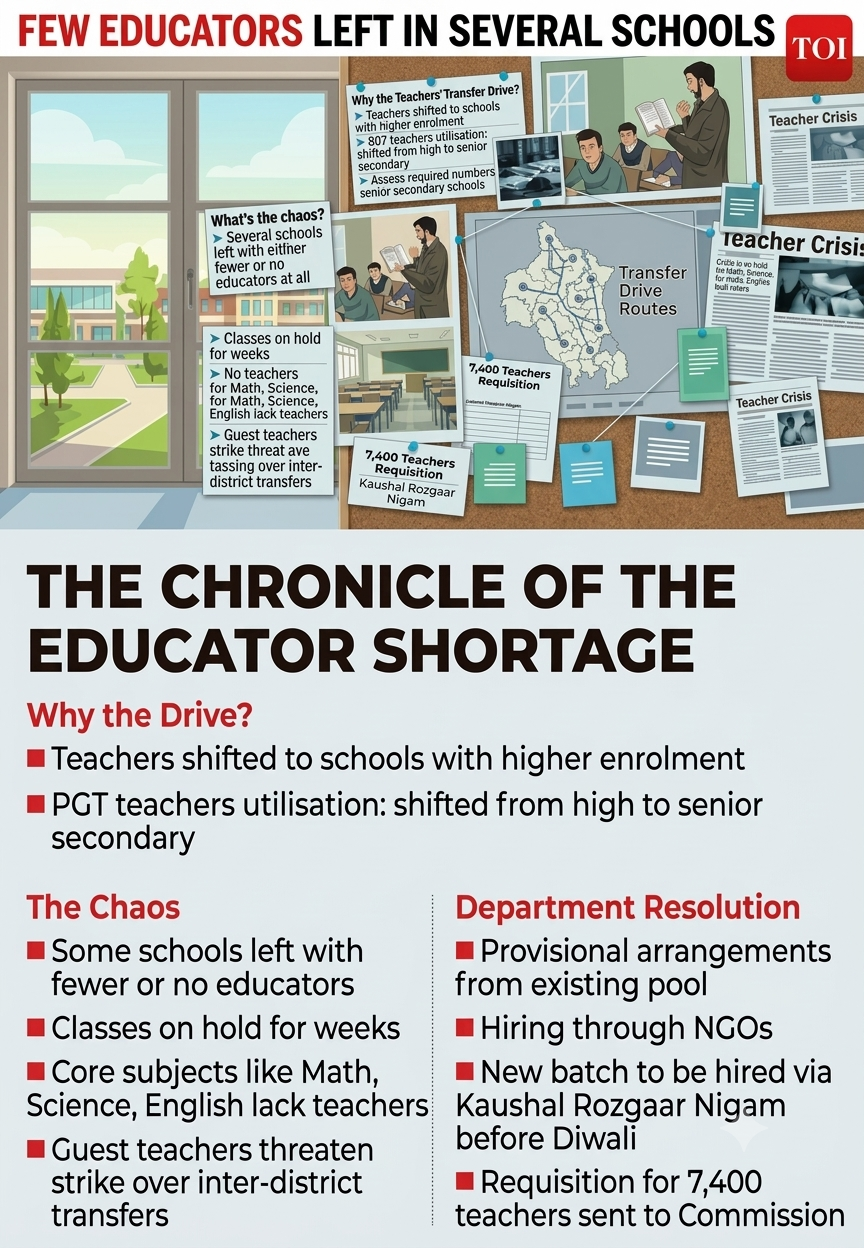
Few Educators Left In Several Schools
Three classes, one teacher, two boards
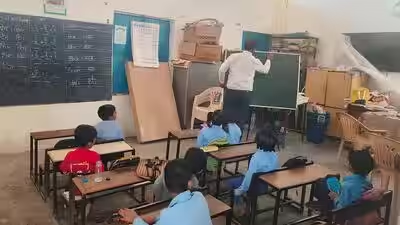
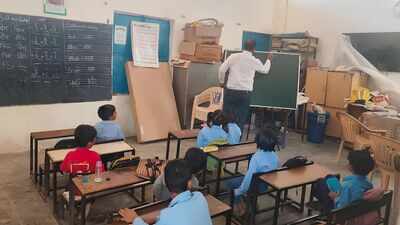
At Government Primary School, Jai Hind Ki Dhani, in Farrukhnagar, only two sanctioned teaching posts cater to students from Bal Vatika to Class 5.One teacher described the challenge of managing three grades within six hours, with younger children learning the alphabet while older students tackle concepts such as ascending and descending order.In another primary school in Farrukhnagar, a teacher was seen using separate boards to manage different classes in the same room. The arrangement allows lessons to continue, but teachers must repeatedly switch between groups with different learning needs.In Kadipur, two teachers were conducting different lessons in the same classroom. Some students said they struggled to follow the lessons when both teachers spoke simultaneously.The Right to Education framework advocates a “one class, one teacher” approach, but the allocation of teachers is linked to overall student strength.According to the norms , schools with up to 60 students receive two teachers, with additional appointments based on enrolment.A senior education department official told TOI that teachers assigned census duties were being deployed in designated slots to minimise disruption. The official said teachers on census duty were being replaced and that others would be assigned duties in subsequent phases.“Schools are not vacant, and academic activities are continuing,” the official said, adding that the census was essential and efforts were being made to balance both responsibilities.The explanation highlights the administrative challenge, but it does not resolve the classroom problem: even when staffing rules are met on paper, one teacher may still have to divide attention between several grades.
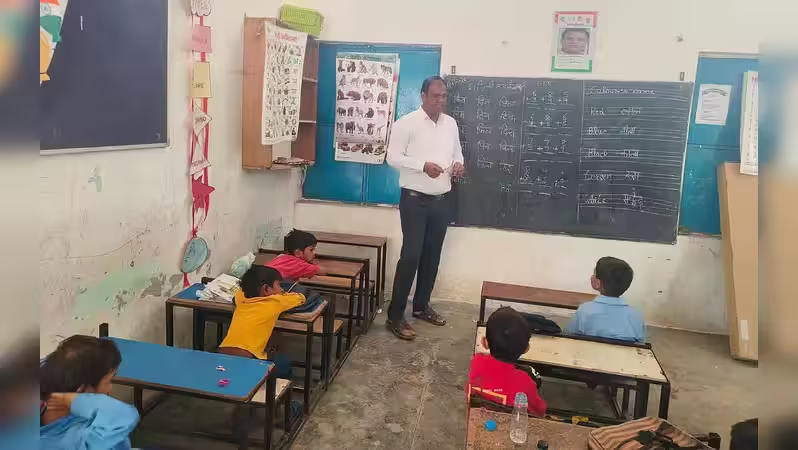
In a primary school in Farrukhnagar, a teacher was seen managing two classes simultaneously.
‘Extremely difficult’
In August, nearly 90% of government schools in Gurgaon were facing staff shortages at some level as examinations approached, teachers told TOI.At Government Senior Secondary School, Fazilpur Jharsa, 15 teachers had been assigned booth-level officer (BLO) duties and another four were appointed BLO assistants.The school had around 780 students.School head Mukesh Kumar described the situation as “extremely difficult for one person to handle a school of this size”.Teaching, student supervision and administrative work were all affected. In other schools with 600-700 students, only one or two teachers reportedly remained to manage classes and routine responsibilities.The timing compounded the problem. Schools had to arrange invigilators, distribute question papers, maintain attendance, supervise students, collect answer sheets and evaluate papers while working with reduced staff. Teachers also reported being directed to organise Independence Day activities.The issue was not simply a shortage of people available to teach. Schools were expected to conduct examinations and supervise hundreds of students while some teachers were engaged in election-related duties.
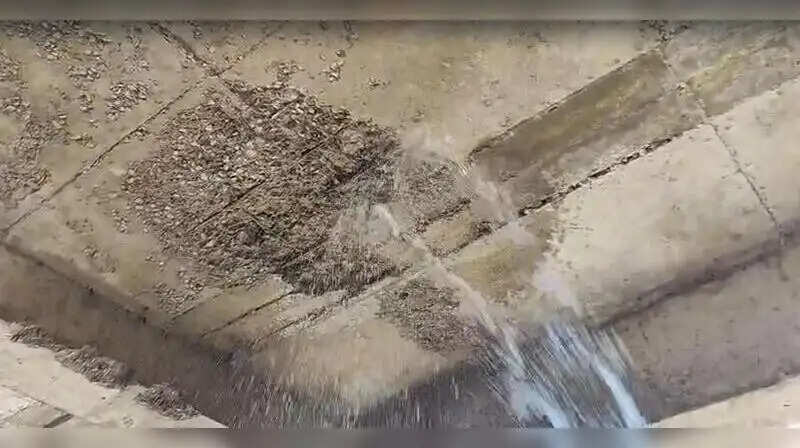
Roof slab collapses at new school building after a ‘gentle’ tap. (Image Credit: Anjali Singh/TOI)
When schools could not conduct assessments
The shortage also disrupted Haryana’s Nipun assessment, which measures foundational learning among students in Classes 1 to 4.In August, the exercise failed to take off in more than half of Gurgaon’s government primary schools. Many teachers had been deployed for Special Intensive Revision (SIR) or Census duties.The digital assessment platform required the login credentials of the regular class teacher. With those teachers away, some schools could not access the system.At Government Primary School and Government Girls Primary School in Badshapur, all eight sanctioned teachers had been deployed on SIR duty.The problem extended to Government Model Sanskriti Primary School in Fazilpur Jharsa, where 19 of 20 teachers had been assigned non-teaching work, leaving head teacher Mukesh Yadav to manage 780 students across 21 sections.“I cannot possibly supervise every child,” Yadav told TOI, describing how inadequate staffing had affected student supervision.He also questioned how the assessment could be conducted without leaving children unattended.Dushyant Thakran, a teacher quoted in the report, said the exercise raised a fundamental contradiction: “We are being asked to generate data about how much a child has learnt, but the real question is how much teaching that child has actually received.”SDM Hitendra Kumar said head teachers or principals facing serious staffing difficulties during the assessment should approach the administration. Depending on requirements, teachers deployed on SIR duty could be released and replaced, he said.
Vacancies in one district, surplus teachers in another
The staffing problem is not confined to teachers being assigned administrative duties.Figures cited by a teachers’ association in September showed 656 vacant primary teacher posts in Gurgaon. Palwal had 1,017 vacancies, Yamunanagar 827 and Faridabad 579.At the same time, Mahendragarh had 250 surplus teachers, Rewari 225 and Charkhi Dadri 149.The teachers’ association argued that the district-cadre system made it difficult to move surplus teachers to districts with shortages. It called for a state cadre and transparent inter-district transfers.The state government has also acknowledged the wider staffing gap. In August, state education minister Mahipal Dhanda directed the school education departments to expedite recruitment and prepare a detailed assessment of vacancies.According to a report, Haryana had 18,540 vacant posts across government schools, even after accounting for positions occupied by guest teachers and other staff. The minister directed officials to coordinate with the Haryana Staff Selection Commission to speed up pending recruitment and ensure schools had adequate teaching and supporting staff.The figures point to two separate challenges: filling vacant posts and ensuring that teachers already in service are available for classroom work.
Schools that allegedly existed only on paper
The problems extend beyond government schools. In August, an investigation by Gurgaon’s district education officer led to closure orders against two unrecognised private schools allegedly operating dummy arrangements for senior secondary students. Around 875 students were left facing uncertainty.RB Kids School in Krishna Nagar, Basai Road, had enrolled 525 students without valid authorisation, according to official documents.It allegedly charged Rs 10,000 to Rs 15,000 per month per student and claimed to register them for board examinations through Karnal Public School.Karnal Public School subsequently submitted an affidavit denying any tie-up with the institution.First Step School in Bhavani Enclave was found operating with 350 students under alleged forged affiliation claims and was also ordered to shut down.The matter was raised before chief minister Nayab Singh Saini at a district public grievances meeting. He ordered a high-level departmental committee to examine the allegations, including the role of recognised schools and the status of affected students.The investigation raised questions about how students could be enrolled in institutions without valid recognition and what would happen to their academic progress after the closure orders.
Students reaching Class 12 without basic skills
At a government school in Bhadas, Nuh, a surprise visit by Congress MLA Mamman Khan revealed another concern.Khan, who had studied at the school until Class 5, found students struggling with basic reading and arithmetic. Some Class 8 students could not read simple passages in Hindi and English or solve basic addition problems.A Class 12 student was unable to read a line in English or write a simple leave application.Khan said many notebooks were blank or contained only a few lines, with relatively few carrying teachers’ signatures or corrections.
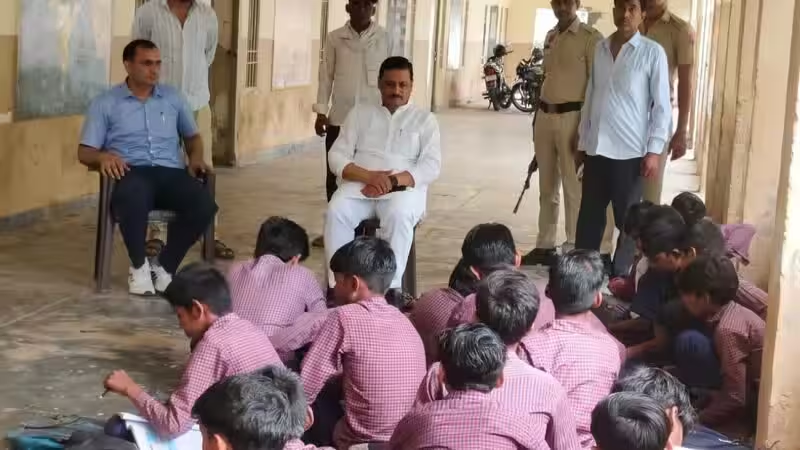
Image Credit: TOI
“After spending so many years in school, this level of learning is unacceptable,” he said, calling for an inquiry into teaching and monitoring.Nuh deputy commissioner Akhil Pilani said directions had been issued to the school and education department to improve attendance through the involvement of school management committees, parents and the local community.The episode raised a question that staffing figures alone cannot answer: whether students are acquiring foundational skills as they progress through successive grades.
Even new classrooms raise questions
In Bhondsi, a portion of the roof slab of a new block under construction at a government senior secondary girls’ school collapsed after villagers allegedly tapped it lightly after noticing cracks.The education department stopped construction and ordered a technical audit. Officials identified possible flaws, including inadequate concrete strength, insufficient slab thickness and poor curing.Sudesh Raghav, district project coordinator for Samagra Shiksha in Gurgaon, said the contractor and agency had been directed to make necessary corrections.“Student safety is our top priority, and no compromise will be made on quality,” he said, adding that strict action would follow if negligence or inferior materials were established.Until the building is completed, students have been attending classes in shifts at a government boys’ school.
The bigger question
Across these incidents, the challenges differ. Some schools lack sufficient teachers; others lose staff to administrative duties. In one district, vacant posts coexist with surpluses elsewhere.Meanwhile, allegations against unrecognised schools and concerns over construction quality raise questions about oversight.Officials have pointed to recruitment, staff adjustments, administrative coordination and technical audits as possible remedies. But the immediate problems remain visible in classrooms where teachers must divide their attention between grades, assessments cannot proceed without the right staff and students struggle with skills expected of their classes.The stories are not just about three classes sharing one teacher or an examination that cannot begin.They reveal the difficulties schools face in delivering the basics of education — qualified teachers, uninterrupted instruction, reliable assessments, recognised institutions and safe classrooms.