








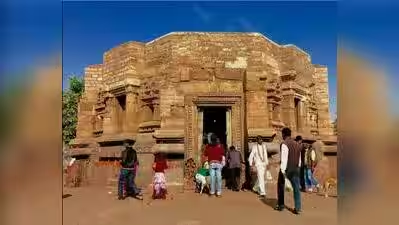
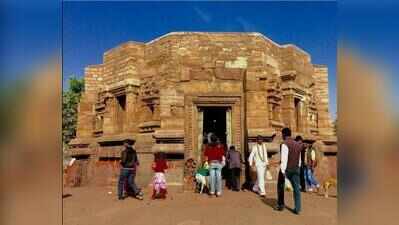
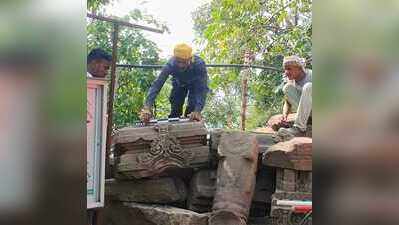
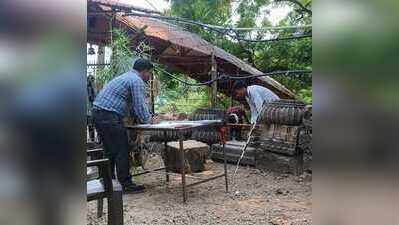
Patna: The state govt has launched a scientific exercise to determine whether scattered architectural remains around the ancient Mundeshwari temple in Kaimur can help reconstruct the shrine’s original form, officials associated with the project said.Regarded as one of India’s oldest surviving temples, Mundeshwari is a protected monument under the Archaeological Survey of India (ASI). While the temple continues to attract thousands of devotees, especially during Navratri, several stone blocks and architectural fragments remain scattered across the hilltop. Their original location and relationship to the existing structure have not yet been conclusively established.According to executive director of Bihar Heritage Development Society (BHDS), Anil Kumar, the exercise, entrusted to the BHDS, aims to scientifically document and assess these remnants to determine whether they can be used to reconstruct the temple in the Nagara architectural style.A committee headed by the development commissioner has been constituted for the project. It includes senior officials of the art, culture and youth department and ASI, along with Padma Shri K K Muhammad, Cardiff University archaeologist Fiona Buckee, Calcutta University scholar Rajat Sanyal and BHDS executive director Anil Kumar.Although the temple has been studied by several Indian and foreign scholars over the years, a comprehensive scientific assessment of the surviving fragments had remained pending. Efforts to reconstruct the temple were proposed earlier by Acharya Kishore Kunal in the 1990s and again in the early 2000s, but the plan could not move forward without ASI approval.The committee visited the site in July and decided to begin with scientific documentation of the scattered remains. “The work started in the first week of Sept. We will assess the condition of the fragments and use archaeological and scientific methods to determine whether they can support reconstruction of the temple in the Nagara style,” Anil Kumar said.Preliminary observations suggest the fragments belong to different periods, including the Gupta and post-Gupta eras, the 11th-12th centuries and the 16th-17th centuries, indicating multiple phases of construction, additions and alterations to the temple complex.Officials said that if reconstruction is found feasible, the surviving fragments may be reused in the process. If not, the remains will be preserved and displayed chronologically in a museum for devotees, visitors and researchers.