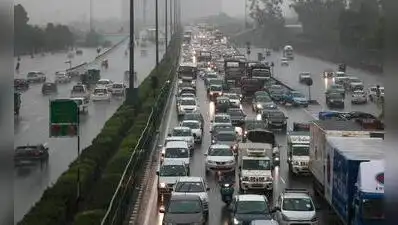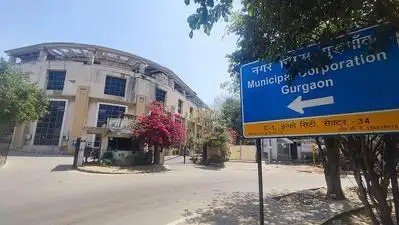







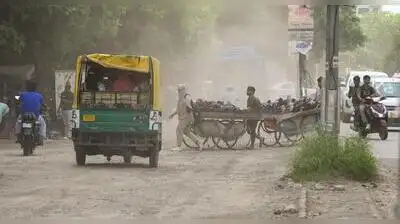
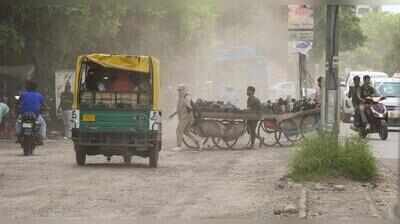
Gurgaon: Accumulated road dust and construction waste, damaged footpaths and potholes exposed gaps in Gurgaon’s road cleaning and maintenance during a CAQM inspection on Wednesday. The commission recorded 258 violations across 52 road stretches spanning around 104km.Of these, 174 violations were found on roads under MCG and 84 on stretches under GMDA, according to CAQM. Four flying squads covered about 56km of MCG roads and 48km of GMDA roads.Conducted under Operation Clean Air, the drive aimed to assess visible road dust and the effectiveness of cleaning and sweeping operations. The inspection covered major stretches including Palam Vihar, Pace City-I and II, sectors 10, 21, 22 and 23, Sikanderpur, sectors 53, 56, 27, 43, 26, 42 and 54, Mehrauli-Gurgaon Road, Dwarka Expressway, Daultabad Road and Dharampur Road, among others under the two agencies.“These contribute to dust generation and its resuspension due to vehicular movement. This can worsen ambient air quality, making regular and effective road cleaning critical to dust control,” a CAQM official said.The commission has directed MCG, GMDA and other agencies concerned to take corrective measures on a priority basis. They have been asked to keep roads under their jurisdiction clean and dust-free through regular sweeping, removal of accumulated dust and C&D waste, and timely corrective action. CAQM warned that non-compliance could invite strict action, including prosecution under the law. Inspection drives under Operation Clean Air will continue across Delhi-NCR to assess the implementation of air pollution control measures, identify compliance gaps and ensure timely corrective action.According to the pollution board, dust particle size determines the potential hazard to human health. Particles larger than 10 micrograms per cubic meter (μg/m³) and 2.5μg/m³ are not breathable and can damage only external organs, often causing skin and eye irritation, conjunctivitis and enhanced susceptibility to ocular infection. Inhalable particles, those smaller than 10μg/m³ and 2.5μg/m³, often get trapped in the nose, mouth and upper respiratory tract and can be linked to asthma, tracheitis, pneumonia, allergic rhinitis and silicosis. Finer particles may penetrate the lower respiratory tract and enter the bloodstream, affecting internal organs and potentially triggering cardiovascular disorders.TOI has consistently reported how Gurgaon’s road dust problem deepened in the absence of sustained enforcement. In a separate plea heard by NGT on Feb 24, another applicant flagged road and construction dust as the biggest contributor to PM10 levels and alleged that authorities did not take “effective steps” to control it. The tribunal issued notices to the Haryana govt and civic agencies in that matter as well.