










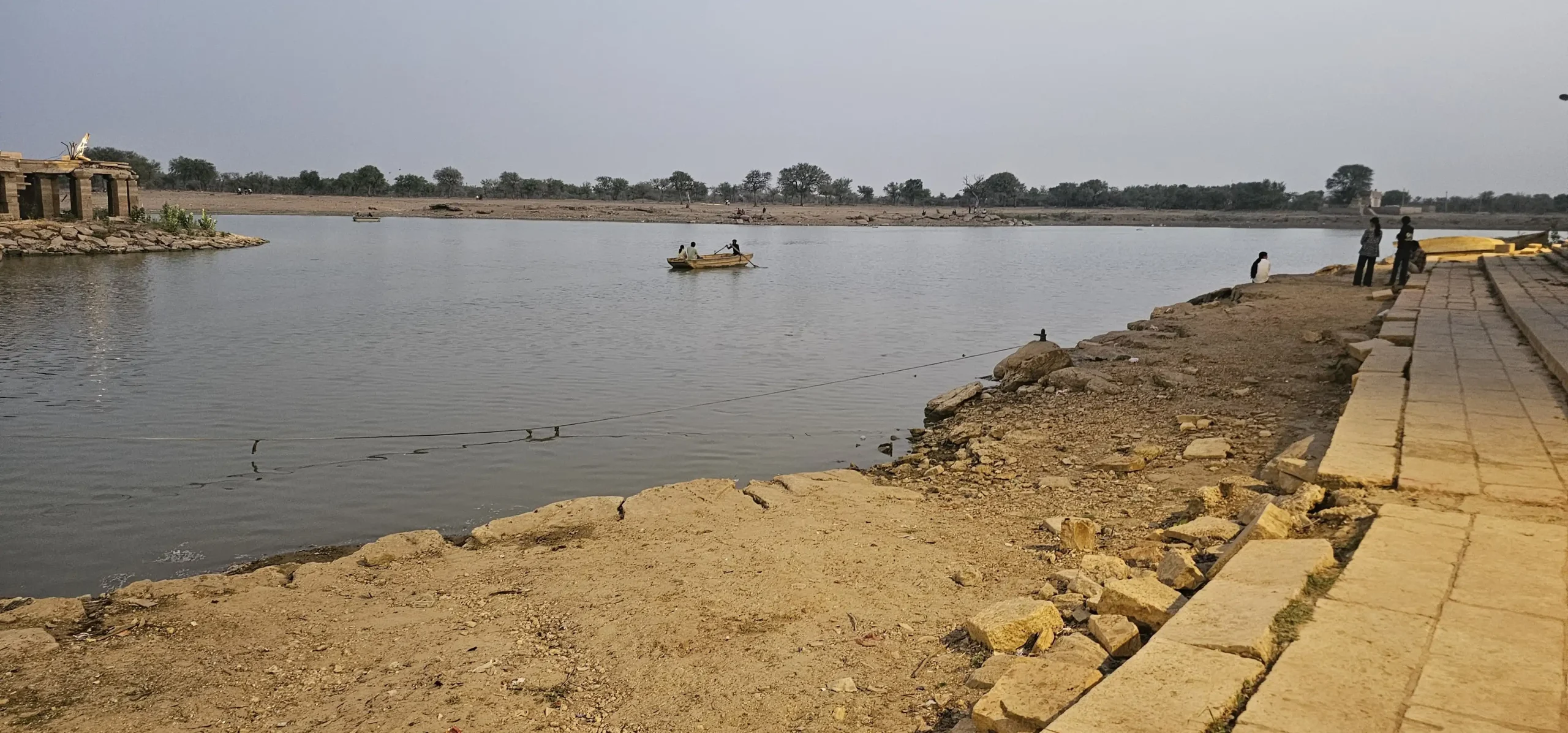
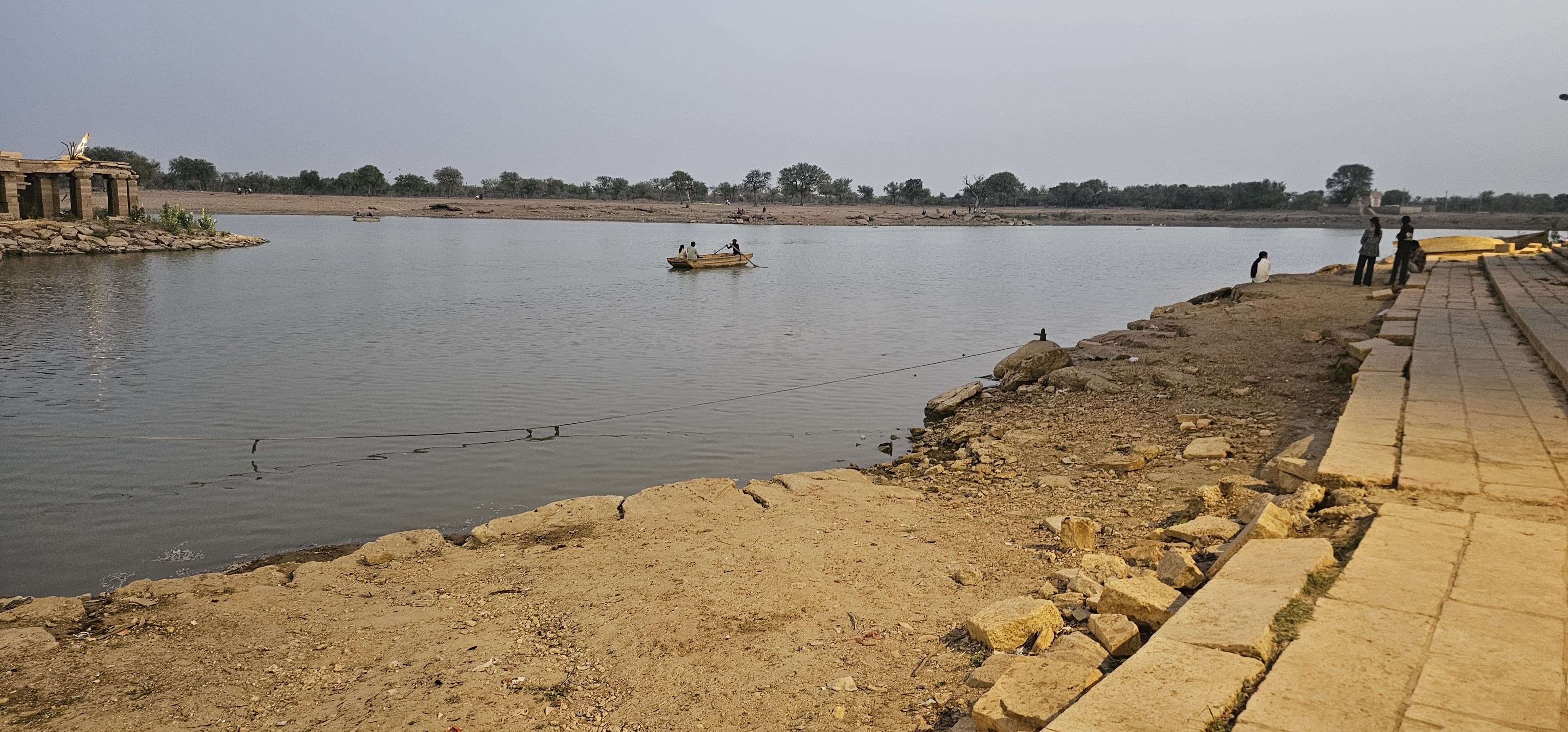
Jaisalmer: Jaisalmer’s iconic Gadisar Lake is on the verge of drying up for the first time since the 2002-03 drought, with deficient monsoon rainfall and persistent Oct heat exposing large stretches of its bed ahead of the crucial winter tourism season.Jaisalmer Municipal Council has proposed digging four tubewells at a cost of over Rs 60 lakh to replenish the historic reservoir. However, concerns remain over the long-term sustainability of the waterbody and its impact on tourism-dependent livelihoods.Located near the city’s entrance, Gadisar Lake attracts visitors with its boating facilities, temples, chhatris and historic architecture. Falling water levels have exposed dry patches around structures in the middle of the lake, diminishing its visual appeal and prompting tourists to cut short their visits.Local resident Chandra Prakash Sripat said scanty rainfall and continued heat had steadily reduced the lake’s water level.The crisis has hit small businesses. Haji Khan, who operates boats on the lake, said declining water levels had left his boats idle, threatening his ability to meet household expenses and pay his children’s school fees.Dhapu, who sells traditional jewellery, bangles and cosmetics along the embankment, said falling tourist footfall had sharply reduced her sales.Municipal Commissioner Pawan Kumar said the administration was exploring groundwater sources and would soon begin work on four tubewells. The project is estimated to cost more than Rs 60 lakh.A canal-based solution had been introduced nearly two decades ago, when a pipeline connected the lake to the Indira Gandhi Canal project to ensure supplies during droughts. The system became defunct due to poor maintenance.The crisis comes after nearly Rs 3 crore was spent recently on improving the lake’s ghats, chhatris and embankments.Historian Om Prakash Bhatia said the reservoir was originally developed to meet Jaisalmer’s water needs, with its origins dating to the 12th century and its expansion under Rawal Gadsi Singh in the 14th century.Groundwater scientist Dr N D Inkhia said a sustainable solution required both canal water and groundwater to maintain levels during deficient rainfall.