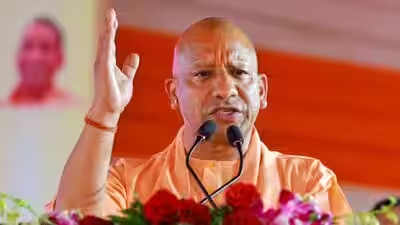













Uttar Pradesh is preparing to take a significant step towards transforming its large youth population into a globally competitive workforce. The state government, led by Chief Minister Yogi Adityanath, has approved the Sardar Vallabhbhai Patel Skill Training and Employment Zone (SVPSTPZ) Development Scheme, an ambitious initiative designed to integrate skill training, industrial requirements and employment opportunities across all 75 districts of the state.With a proposed expenditure of Rs 1,725 crore over three years, the scheme aims to develop Uttar Pradesh into a global manpower hub and a preferred source of skilled workers for industries in India and abroad. The initiative will organise the state’s skill-development and employment ecosystem into nine geographical zones, supported initially by five major training and employment centres.The significance of the decision extends beyond the establishment of training institutions. It represents an effort to build a coordinated system in which young people can acquire market-relevant skills, employers can access trained personnel, and districts can benefit from employment opportunities linked to their economic strengths.For a state with a large workforce, an extensive network of micro, small and medium enterprises (MSMEs), and expanding industrial corridors, the initiative could become an important instrument for linking economic growth with employment generation.
A new model of skill development and employment
The central idea behind the scheme is to move from training-centred programmes towards an integrated system that connects training with actual employment demand. Traditionally, skill-development initiatives have often faced the challenge of ensuring that the courses offered match the requirements of employers. A person may complete a vocational course but still struggle to find work if the training does not correspond to the technologies, standards and practical competencies required by industry.The new scheme seeks to address this gap by bringing together training providers, industrial establishments, employment agencies, government departments and industrial development authorities within a coordinated framework.Under the proposed arrangement, the skill requirements of different industries and regional economies will be assessed, and training will be designed around those needs. The objective is to make young people more employable while helping enterprises find workers with the appropriate technical and professional competencies.The initiative also seeks to expand the geographical reach of skill development. Instead of concentrating opportunities in a few major cities, the nine-zone framework will connect all 75 districts to a broader network of training and employment services.This is particularly relevant for young people in smaller towns and rural areas, where access to specialised vocational training and placement networks may be more limited.
The Rs 1,725-crore investment
The state government has estimated expenditure of ₹1,725 crore over the next three years for the scheme. This is the announced project outlay; it should not be confused with an amount already spent or a separate annual budget allocation.The proposed investment will support the development and operation of skill-training and employment centres, training infrastructure, industry-linked programmes, institutional coordination and technology-enabled monitoring.The scheme also provides for viability gap funding (VGF), where necessary, to support private developers and training providers. Such assistance can help make projects financially viable when the expected revenue from operating them is insufficient to cover their costs.The centres may be developed and operated either through public-private partnerships, including the Design, Build, Finance, Operate and Transfer (DBFOT) model, or through government institutions. This allows the state to draw upon private-sector investment and expertise while retaining a role in planning, oversight and quality monitoring.The long-term value of the investment will depend on how effectively funds are translated into functioning infrastructure, high-quality courses, employer partnerships and verifiable employment outcomes.
Five major centres to anchor the statewide network
The first phase will establish five major skill-training and employment centres at strategic locations. These centres are expected to serve as the principal hubs of the wider nine-zone network.The proposed locations and institutional arrangements are:
- Lucknow: A centre to be established by the MSME Department.
- Kanpur: A centre to be developed under the public-private partnership (PPP) model.
- Gorakhpur: A centre to be established through the Gorakhpur Industrial Development Authority (GIDA).
- Gautam Buddha Nagar: A centre involving the combined support of the Noida, Greater Noida and Yamuna Expressway Industrial Development Authorities.
- Jhansi: A centre to be established through the Bundelkhand Industrial Development Authority (BIDA).
Each centre will require approximately 10–25 acres of suitable, encumbrance-free land. The plan also provides for four-lane road connectivity from a nearby highway or expressway within two years, improving accessibility for trainees and facilitating links with industrial areas.The selection of these locations reflects the diversity of Uttar Pradesh’s economy. Gautam Buddha Nagar and its adjoining areas have a strong presence in electronics, IT, manufacturing and services. Kanpur has a legacy of manufacturing and industrial activity, while Lucknow is an administrative, educational and emerging technology centre. Gorakhpur is an important industrial growth centre in eastern Uttar Pradesh, and Jhansi is positioned to benefit from the development of the Bundelkhand Industrial Development Authority region.By establishing hubs in different parts of the state, the government intends to create a network that responds to regional employment opportunities rather than relying on a uniform training model for every district.
Nine zones covering all 75 districts
A defining feature of the scheme is the division of Uttar Pradesh into nine skill-development and employment zones. The zones will bring together districts and divisions with related industrial, commercial and labour-market characteristics.The proposed geographical structure is as follows:
- Zone 1: Gautam Buddha Nagar, Ghaziabad and Hapur.
- Zone 2: Saharanpur division, along with Bulandshahr, Baghpat and Meerut.
- Zone 3: Moradabad and Bareilly divisions.
- Zone 4: Agra and Aligarh divisions.
- Zone 5: Lucknow and Ayodhya divisions.
- Zone 6: Kanpur and Prayagraj divisions.
- Zone 7: Chitrakoot, Vindhyachal and Jhansi divisions.
- Zone 8: Varanasi and Azamgarh divisions.
- Zone 9: Gorakhpur, Basti and Devipatan divisions.
The zonal approach could help identify the skills most relevant to each region. For example, western Uttar Pradesh can draw upon opportunities in electronics, logistics, manufacturing and information technology. The Moradabad and Aligarh regions can benefit from training related to handicrafts, metal products, locks and other manufacturing activities. The Varanasi, Bhadohi and Mirzapur belt has opportunities in textiles,