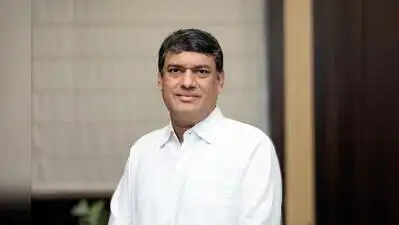












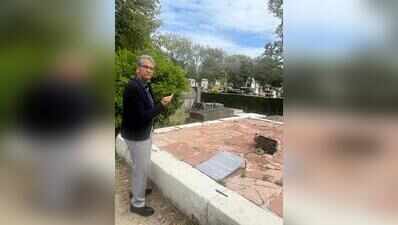
Among the many landmarks that attract visitors to Paris, one destination on my recent trip carried a significance far greater than any museum or monument. It was Père-Lachaise Cemetery, the resting place of writers, artists and statesmen. I had come there for a deeply personal reason: to pay my respects to Queen Malika Kishwar, mother of Nawab Wajid Ali Shah, the last ruler of Awadh, and one of the most remarkable yet forgotten figures of India’s colonial history.Known as Janab-i-Aliya, Malika Kishwar occupied a revered position in the royal household of Awadh. Her life changed dramatically in 1856 when the East India Company annexed the kingdom on the pretext of maladministration. Wajid Ali Shah believed that the British sense of justice would ultimately prevail. He travelled to Calcutta to appeal to Governor-General Lord Canning for restoration of his kingdom, but his efforts failed.The Nawab then considered travelling to England to place his case directly before Queen Victoria. Ill health, however, prevented him from undertaking the voyage. At that crucial moment, his mother stepped forward.Malika Kishwar resolved to undertake a journey of thousands of miles in the hope of reclaiming her son’s kingdom.On June 15, 1856, she sailed from Calcutta aboard the SS Bengal. Accompanying her were her son Prince Mirza Sikandar Hashmat, her grandson Prince Hamid Ali Bahadur and a retinue of around seventy attendants. Their objective was clear: to seek justice through Queen Victoria and the British Parliament and secure the restoration of Awadh.The journey was long and arduous. More than two months later, the royal party reached Southampton. Crowds gathered to catch a glimpse of the Indian queen and her entourage. But her observance of strict purdah presented an unusual challenge. To protect her privacy, she was transported in a covered sedan chair. During the journey from Southampton to London, attendants held up large sheets of calico to form a moving screen so that she could pass unseen through public spaces.Malika Kishwar arrived in England believing that a personal appeal to Queen Victoria might succeed where previous efforts had failed. She soon discovered the limitations of royal authority within Britain’s constitutional system. The annexation had been carried out by the East India Company, and there was little interest in either political or commercial circles for reversing that decision.Still, her delegation did not give up. Lawyers were engaged, petitions drafted and parliamentarians approached. The campaign became a sustained exercise in diplomacy, lobbying, legal advocacy and public persuasion.After months of waiting, Malika Kishwar was finally received by Queen Victoria at Buckingham Palace on July 4, 1857. She was accorded full honours. Yet the timing could hardly have been worse.The uprising of 1857 had spread across much of northern and central India, altering the political atmosphere. British authorities were preoccupied with suppressing the rebellion, while Wajid Ali Shah had been arrested on June 15, 1857, and placed under house arrest at Fort William in Calcutta.The audience with Queen Victoria proved deeply disappointing. Malika Kishwar realised that the Queen lacked the power to undo the annexation. Nevertheless, one final effort was made. On August 6, 1857, Lord Campbell, Chief Justice of the Queen’s Bench, presented a petition before the House of Lords. It was rejected on technical grounds. A subsequent attempt in the House of Commons also failed. The mission that had inspired such courage and sacrifice had effectively come to an end. Yet another chapter remained.Determined to return home via Mecca and perform the pilgrimage, Malika Kishwar sought permission to leave Britain. The British authorities initially refused to provide the necessary documents. Only after intervention by the French Embassy was she allowed to depart. On January 22, 1858, she reached Paris with around 40 members of her delegation.By then, prolonged illness, disappointment and the strain of two difficult years had severely weakened her. Just two days after arriving in the French capital, she died. She was buried at Père-Lachaise Cemetery in accordance with Islamic rites. Representatives of the Ottoman Empire and Persia attended the funeral, paying tribute to a queen whose determination had earned widespread respect.The tragedies did not end there. Her young granddaughter, Rifat Ara Begum, also died and was buried beside her grandmother. A few weeks later, Prince Mirza Sikandar Hashmat died in London. His body was embalmed and transported to Paris, where he too was laid to rest alongside his mother and daughter.As a direct descendant of Wajid Ali Shah, I have always felt a strong connection to my family’s history. Yet among all the stories passed down through generations, none affected me as deeply as that of Malika Kishwar. One thought always lingered: a woman had crossed oceans in an effort to save her son’s kingdom, yet no member of her family had visited her grave after her death.That realisation stayed with me for years.Standing before her resting place in Paris, 168 years after her burial, I felt history become intensely personal. As I recited the fateha on behalf of my family, I felt I was reconnecting with a forgotten part of our shared past, separated from us by geography, political upheaval and time itself.As I left the cemetery, I was reminded of Mughal King Bahadur Shah Zafar’s famous lament:Kitna hai badnaseeb Zafar, dafn ke liye do gaz zameen bhi na mili ku-e-yaar mein (How unfortunate is Zafar, that he could not even find two yards of earth for burial in the land of his beloved).The circumstances of Zafar and Malika Kishwar were different, yet their stories converged in one poignant respect. Neither found a final resting place in the homeland they loved. Malika Kishwar’s grave remains in a corner of Paris, far from Lucknow and the kingdom she fought so hard to save, a lasting reminder of courage, dignity and perseverance in the face of impossible odds.(Writer is a former Indian Revenue Service officer and the great great grandson of Nawab Wajid Ali Shah)