









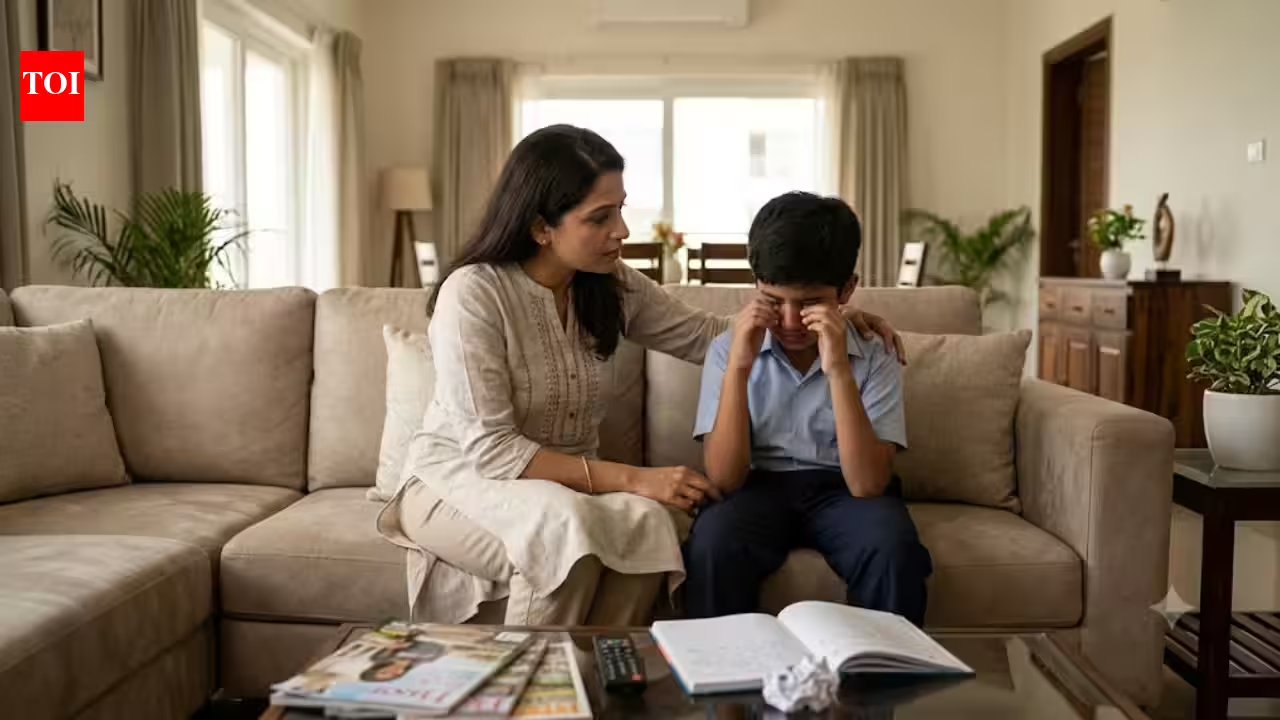
A child comes home upset because a friend ignored them. They lose a small amount of money at school but say nothing. They make a mistake in class, get a warning from a teacher or have a problem with a friend and still keep quiet. Then, days later, the problem becomes much bigger and the parents finally find out. It is easy to ask, “Why didn’t you tell me earlier?” But children do not always stay silent because they do not trust their parents. Sometimes, they are learning from what happens after they speak.
Children may start deciding which problems are worth sharing
22 Sept 2026 | 15:04
What pregnancy purchase turned out to be genuinely useful?
As children grow, they become more aware that not every part of their life needs to be reported to a parent. Research on adolescent disclosure has found that young people make different decisions about what they tell parents depending on the type of issue. A study of 118 early and middle adolescents found that nondisclosure could have different reasons. Some young people avoided telling parents because they expected disapproval, while others considered an issue personal or not serious enough to discuss. This means a child who keeps a small problem to themselves may be thinking, “I can handle this,” “It isn’t important enough,” or “I don’t want this to become a big discussion.” That decision can sometimes backfire when the problem continues or grows.
The reaction may teach the child whether to speak next time

Photo: Canva
One of the clearest findings comes from a longitudinal study of 982 young people. Researchers looked at how parents’ positive and negative reactions to disclosure were connected with later secrecy and openness. They found that negative reactions were associated with young people feeling more controlled and less connected to their parents. Those feelings, in turn, were linked with increased secrecy and reduced disclosure. Positive reactions were associated with greater connection and more disclosure.This does not mean parents should never correct a child. A parent may need to set a boundary, explain consequences or intervene when something is unsafe. The important part is what happens before the correction. If a child says, “I had a fight with my friend,” and the first response is “What did you do?” followed by a long lecture, the child may remember that experience the next time something happens. They may decide it is easier to stay quiet.
A child may also be trying to solve the problem alone
Keeping something private is not automatically unhealthy. Research on adolescent-parent disclosure shows that young people do not see every area of their lives as something parents are entitled to know. In a study of 276 adolescents, participants disclosed more to mothers than fathers, particularly about personal matters. Greater trust and parental acceptance were associated with more disclosure and less secrecy. So a child who does not immediately mention a small friendship problem may simply be trying to work it out independently. The concern comes when this becomes a pattern: the child repeatedly hides problems, waits until the situation is serious, or becomes visibly worried about what will happen if a parent finds out.
What parents can do when the child finally tells them

Photo: Canva
The first conversation after a child finally opens up can influence whether they speak earlier next time. Instead of starting with, “Why didn’t you tell me?”, try: “I’m glad you told me now. Tell me what happened.” Then ask: “Do you want me to listen, or do you want help fixing it?” If the problem is small, resist the urge to immediately take control. Give the child a chance to explain what they have already tried. Parents can also make it clear that telling them about a problem does not automatically mean losing control over the situation. Research on parental monitoring has similarly found that adolescents’ negative reactions to monitoring were associated with less disclosure, suggesting that a parent’s approach to getting information can affect how willing a young person is to share.
The goal is not to make children report everything
Children do not need to tell parents every disagreement, embarrassing moment or minor mistake. What matters is whether they believe they can tell a parent when something becomes difficult. A child who says, “I didn’t tell you because I thought I could fix it myself” is very different from one who says, “I didn’t tell you because I knew you would get angry.” The first may be developing independence. The second may be learning that silence feels safer than speaking. And that is the unexpected lesson behind many delayed disclosures: sometimes, the size of the problem is not what determines whether a child talks. What they expect to happen after they talk can matter just as much.