








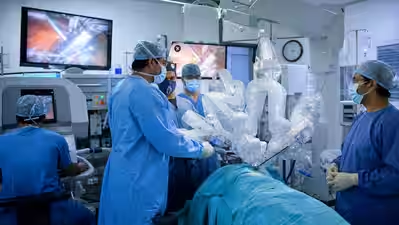
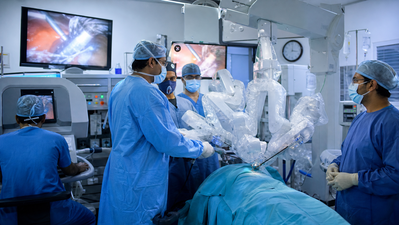
Long identified with KGMU, SGPGIMS and RMLIMS as the pillars of its healthcare system, Lucknow is now entering a new phase of medical expansion.Thousands of new hospital beds, super-speciality centres and growing private investment, coupled with advances in robotics, artificial intelligence, genomics and precision medicine, are reshaping the city into an emerging healthcare hub of North India.KGMU BROADENS HEALTHCARE REACHKGMU is expanding well beyond its traditional strengths in trauma care, with major investments across diagnostics, surgery, orthopaedics, women and child healthcare, critical care and digital medicine.A key project is the Phase-II expansion of the Trauma Centre, which will add nearly 500 beds along with new critical-care units, operation theatres and diagnostic facilities.KGMU spokesperson Prof KK Singh said the expansion is expected to significantly strengthen trauma and emergency care services.The university is also enhancing its imaging and laboratory infrastructure, developing a 340-bed Orthopaedic Super-Speciality Centre and planning a 500-bed women and newborn healthcare facility.KGMU is also scaling up robotic and minimally invasive surgeries while integrating AI-based tools, electronic medical records and telemedicine into patient care.RMLIMS GEARS UP FOR MAJOR EXPANSIONDr Ram Manohar Lohia Institute of Medical Sciences is preparing for a substantial capacity increase with plans for a 1,010-bed super-speciality hospital and a 350-bed Level-1 trauma centre near Shaheed Path.According to RMLIMS spokesperson Prof Bhuwan Chandra Tiwari, the proposed expansion will strengthen the institute’s super-speciality, emergency and critical-care capabilities.The institute is also expanding services in neurosurgery, transplant medicine, reproductive medicine and robotic surgery, reflecting the growing demand for advanced medical treatment in the region.SGPGIMS MOVES INTO QUATERNARY CARESanjay Gandhi Postgraduate Institute of Medical Sciences is positioning itself as a major quaternary-care destination through a planned 500-bed integrated centre that will bring together cardiac sciences, neurosciences, renal and liver care, oncology, maternal-fetal medicine, genomics, gene and cell therapy, rare diseases and critical care.Officials said the integrated model will enable specialists from multiple disciplines to jointly manage highly complex cases. The institute is also continuing to strengthen its transplantation programmes.Another flagship project is the 200-bed Saloni Heart Centre of Excellence for Children’s Heart Healthcare. Once fully operational, the facility is expected to perform around 5,000 congenital heart surgeries annually, making it one of the country’s largest dedicated paediatric cardiac centres.CANCER CARE EMBRACES PRECISION MEDICINECity’s cancer-care ecosystem is also evolving rapidly. Kalyan Singh Super Speciality Cancer Institute is expanding into molecular diagnostics, genomics and personalised cancer treatment.Mecial superintendent Prof Varun Vijay said that a collaborative initiative involving IIT-Kanpur and Karkinos Healthcare is helping strengthen cancer research and molecular diagnostics, including next-generation sequencing that supports more targeted treatment approaches.PRIVATE SECTOR DRIVES NEW INVESTMENTPrivate healthcare providers are also playing an increasingly important role in the city’s healthcare expansion.Max Healthcare is investing nearly Rs 1,400 crore in a new 712-bed Phase-I hospital at Shaheed Path.Medanta and ApolloMedics continue to expand advanced and quaternary-care services. Apollo Hospitals is adding 250 beds through its Tower-2 project, increasing capacity from 350 to 600 beds soon, with further expansion planned.Healthcare groups such as HealthCity Vistaar and Chandan Hospital are also broadening speciality and critical-care offerings, contributing to the city’s growing healthcare capacity.TECH CENTRAL TO TREATMENTTechnology is increasingly shaping healthcare delivery across Lucknow.Hospitals are exploring or deploying AI in radiology, pathology, trauma management, ICU monitoring, clinical decision support systems and medical research.Robotic surgery is becoming common, while genomics and molecular diagnostics are finding wider application in oncology and rare-disease management.Healthcare institutions are also moving towards integrated digital platforms that connect diagnostics, treatment planning, surgery, intensive care and follow-up services within a single ecosystem.PRIVATE MEDICAL COLLEGES ADD CAPACITYEra’s Lucknow Medical College, TS Misra Medical College, Career Institute of Medical Sciences, and Integral Institute of Medical Sciences & Research are emerging as another important pillar of healthcare delivery.Through their attached teaching hospitals, these institutions provide tertiary care, emergency services, intensive care and specialist treatment while also training the next generation of medical professionals.Their expanding hospital infrastructure is adding to the city’s pool of doctors, specialists and skilled healthcare workers, strengthening the wider healthcare ecosystem.GOVT HOSPITALS REMAIN BACKBONEEven as tertiary centres expand, Lucknow’s public healthcare system extends far beyond its premier institutions.Balrampur Hospital, Civil Hospital, TB Hospital, Lok Bandhu Hospital and several other govt facilities continue to provide essential emergency, general and speciality care.The wider network of 10 district hospitals and 52 CHCs and PHCs serves as the first point of contact for many patients and plays a crucial role in referral-based care.Together, these facilities reduce the burden on tertiary institutions while ensuring affordable healthcare remains accessible at the community level.CHALLENGES REMAINDespite rapid expansion, Lucknow’s healthcare system continues to face significant pressures.Govt hospitals routinely operate under heavy patient loads. KGMU handles an estimated 7,000-8,000 patients daily, while its trauma centre often accommodates more patients than its designed capacity.Similar pressures are visible at Balrampur Hospital, where bed occupancy frequently exceeds sanctioned strength.The demand for healthcare services is rising steadily across Uttar Pradesh, reflected in growing OPD footfalls and hospital admissions.At the same time, lifestyle diseases are emerging as a major concern. Studies indicate that nearly one in three adults above 30 years has hypertension, while almost one in five lives with diabetes. A substantial proportion of diabetes patients also suffer from high blood pressure.Former KGMU physiology department head Prof Narsingh Verma has stressed the need for stronger preventive healthcare and early diagnosis, particularly as diabetes, obesity and hypertension become more prevalent.He has linked the growing disease burden to factors such as pollution, processed food consumption and increasingly sedentary lifestyles.Former health official Dr DS Negi has similarly underlined the importance of expanding critical-care infrastructure, noting that additional ICU and ventilator capacity would be vital as healthcare demand continues to increase.THE ROAD AHEADFor Lucknow, public health expert Dr Amit Singh said that next phase of healthcare growth would be judged not merely by the number of new hospitals or beds added. The real test will be whether the city can create a balanced healthcare system supported by enough doctors, nurses, technicians, diagnostics, affordable treatment options and efficient referral mechanisms.