










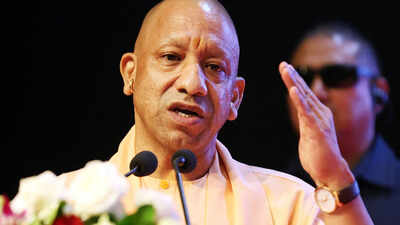
The RaeBareli story under the Yogi Adityanath era is not simply about the expansion of one railway factory. It is about the emergence of an industrial ecosystem in which large-scale manufacturing, MSMEs, investment, skills and services reinforce one another. The transformation is gradually giving the district a new economic identity—one that combines its agricultural strength with modern manufacturing and enterprise-led growth. (Box)Rae Bareli, historically known for its agricultural economy and political prominence, is witnessing a significant economic transformation. Over the last nine years, the district has increasingly emerged as an important manufacturing, railway-engineering and MSME hub, with the Modern Coach Factory (MCF) at Lalganj serving as the principal anchor of this industrial transition.The transformation is particularly visible in three interconnected areas—rail coach manufacturing, expansion of MSMEs and industrial investment, and a broadening economic base reflected in district GDP.In fact, the governance of Yogi Adityanath utilized the presence of MCF to the fullest by creating MSME environment for the good.Modern Coach Factory: The anchor of industrial transformationThe most visible symbol of Rae Bareli’s industrial transformation is the Modern Coach Factory (MCF). Although the foundation stone for the factory was laid in 2007, its potential remained substantially underutilised in the pre-2014 period. The factory was originally planned for an annual capacity of 1,000 coaches, but between 2011 and 2014 it largely undertook minor refurbishment work rather than full-scale coach manufacturing. The first fully manufactured coach was rolled out only in August 2014.The subsequent change has been dramatic. Production rose from just 140 coaches in 2014-15 to 576 in 2016-17 and 711 in 2017-18. By 2018-19, production had reached around 1,425 coaches. The factory has since moved into a different league altogether. It produced 1,684 coaches in 2023-24 and 2,025 coaches in 2024-25, an increase of 341 coaches in a single year.The latest milestone is even more significant. In 2025-26, MCF produced a record 2,126 coaches, its highest-ever annual output, representing nearly 5 per cent growth over the previous year. Importantly, the factory also completed its first Vande Bharat trainset, while producing coach shells, bogies and wheel sets on a large scale.Thus, what was once a largely underutilised railway facility has become one of the country’s important passenger-coach manufacturing centres.From railway factory to industrial ecosystemThe importance of MCF extends beyond the factory gates. A large railway manufacturing unit creates demand for hundreds of components and services—from engineering components, electrical equipment and fabricated structures to cables, fasteners, furniture, safety equipment, logistics and maintenance services.This has helped create a local industrial ecosystem around Rae Bareli. The scale of the change is illustrated by railway procurement data. In 2013-14, purchases from local units in Rae Bareli were reportedly below Rs 1 crore. By 2018-19, purchases from local Rae Bareli units had risen to about Rs 124 crore, while total procurement from MSMEs reached Rs 667 crore. The Railway Ministry specifically noted that the factory had boosted the local economy, generated employment and invigorated industries in its vicinity.This is an important shift in the character of the district economy. Instead of a railway factory functioning as an isolated public-sector establishment, MCF has increasingly become a demand generator for local enterprises.Its modernisation has also brought automation, robotics and advanced manufacturing practices into the district. The factory has progressively expanded its product range, including LHB coaches, MEMU coaches and other specialised coaches, and is now moving into Vande Bharat trainset production.The Centre has also sanctioned expenditure for augmentation of the three major coach manufacturing units, including MCF Rae Bareli. A Parliamentary reply in March 2026 put the original expenditure on establishing MCF at Rs 3,042.83 crore, while additional projects have been sanctioned for upgrading and augmenting coach manufacturing facilities.MSMEs: From ancillary units to a wider industrial baseThe railway factory has been complemented by a broader push towards MSME-led industrialisation. The Uttar Pradesh government has identified Rae Bareli among the districts where new MSME-focused industrial estates are proposed. The state’s plan envisages 15 new MSME industrial zones across 11 districts, covering about 765 acres and providing 872 industrial plots. Rae Bareli is among the districts included in this expansion programme.This is significant because it indicates that the district’s future industrial strategy is not dependent upon a single large public-sector establishment. The objective is to create a wider base of small and medium manufacturing enterprises capable of supplying larger industries, generating employment and participating in domestic as well as export markets.The available MSME data also shows a substantial formalisation of enterprises in the district through Udyam registration. Current district-level datasets track registered MSMEs, manufacturing employment and women-owned enterprises, reflecting the growing formal MSME ecosystem in Rae Bareli.The next stage of development is therefore likely to be the deepening of supply chains—with local enterprises moving from basic subcontracting towards higher-value engineering, fabrication, electrical, mechanical and technology-based production.Industrial investment gains momentumRae Bareli’s industrial profile is also changing through fresh investment proposals. In December 2025, the Uttar Pradesh Cabinet approved investment proposals worth Rs 15,189.7 crore for 12 mega and super-mega industrial units across nine districts, with Rae Bareli among the districts selected for these projects.Such investments are important because they can create a multiplier effect: large projects generate direct employment while simultaneously creating demand for transport, warehousing, construction, maintenance, ancillary manufacturing, food services and other local businesses.This is precisely the industrial model that Rae Bareli needs—a large manufacturing anchor supported by an expanding network of MSMEs and service enterprises.GDP: A changing economic structureThe industrial transition is also taking place against the backdrop of a broader expansion of Rae Bareli’s economic base. According to official Statistics of district-level Gross District Domestic Product data, including Rae Bareli, providing a basis for measuring changes in the district economy over time.The significance of industrialisation should not, however, be judged merely by the size of GDDP. Its larger importance lies in changing the composition of economic activity. Rae Bareli continues to have a strong agricultural foundation. But the growth of railway manufacturing, construction, MSMEs, trade, transport and services is gradually adding new sources of income. This diversification makes the district less dependent on agriculture and creates opportunities for skilled and semi-skilled workers.The railway sector itself is included as a distinct component of district economic activity in Uttar Pradesh’s district-level economic accounting, underscoring the importance of railway-related activity in industrial districts.From employment centre to skills centreAnother important dimension of the transformation is human capital. MCF has created demand for engineers, technicians, welders, electricians, machinists, diploma holders and other skilled workers. The Railway Ministry has also highlighted the development of training facilities linked to the factory to provide skill-development opportunities to local youth.This creates a virtuous cycle: industrial investment generates jobs; jobs generate demand for skills; skilled workers attract more industries; and a stronger industrial base creates opportunities for MSMEs.A new economic identity for Rae BareliThe transformation of Rae Bareli can therefore be understood as a movement through three stages.First, the district had a predominantly agricultural and traditional economic identity.Second, the Modern Coach Factory introduced large-scale modern manufacturing, but its real impact became visible only when production expanded substantially after 2014.Third, the railway factory began generating a surrounding ecosystem of MSMEs, suppliers, skilled workers, logistics providers and other businesses, while new industrial investments and proposed MSME estates are broadening the economic base further.Rae Bareli has now moved from being the location of a major railway factory to a diversified industrial district.