









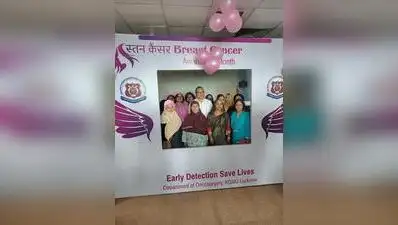

Lucknow: More than half of women in UP found to have breast abnormalities during physical examination do not undergo confirmatory diagnostic tests. As a result, many women with breast cancer reach hospitals only after the disease has reached an advanced stage. Experts from King George’s Medical University highlighted this concern at a Breast Cancer Awareness Month programme on Saturday.They said a large number of women drop out of the care pathway between screening and diagnosis, undermining the benefits of early detection.Citing a recent study, experts from KGMU’s department of surgical oncology said that of the 51,894 women screened, approximately 1,557 were found to have abnormal breast examination results, but only around 639 (41%) visited a diagnostic facility for further evaluation. “In our clinical practice, we see more than 50%-60% of such women who were advised to undergo further tests, but delayed confirmation tests and come in advanced stages,” said Prof Naseem Akhtar, faculty at surgical oncology.While a breast examination does not necessarily indicate cancer, delaying follow-up can result in missed opportunities for early treatment, doctors said.The study identified multiple barriers preventing women from completing investigations, including stigma around breast examinations, fear of cancer, poor awareness, family responsibilities, financial hardship, transport difficulties, loss of wages, discomfort with male doctors and difficulties navigating healthcare facilities.According to Prof Akhtar, nearly seven in 10 women diagnosed with breast cancer reach hospitals in advanced stages, significantly limiting treatment options.“If the tumour is detected when it is less than 5 cm, 85-90% of the breast can be saved. Once it grows beyond that, more extensive surgery may be needed and, in advanced metastatic cases, removal of the entire breast may become unavoidable,” he said.Another challenge, said Prof Vijay Kumar, head of KGMU’s surgical oncology department, is the tendency of some patients to turn to alternative therapies that promise guaranteed cures.“Patients often continue such treatments until the cancer becomes advanced, making it much more difficult to manage,” he said.He also flagged the issue of incomplete cancer surgeries carried out outside specialised centres. “Sometimes, only the visible tumour is removed while residual cancer tissue remains. This can make the disease more aggressive and increase the risk of spread,” he said.Prof Kumar said surgery, chemotherapy and radiation therapy must work in tandem to maximise recovery chances. “Integrated treatment offers the best chance of a complete cure,” he said.They recommended strengthening follow-up systems through ASHA workers and mobile phone-based support to help women navigate referrals and diagnostic services. They also underscored the need for respectful care, practical support and stronger referral mechanisms.