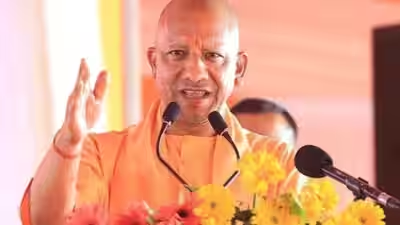












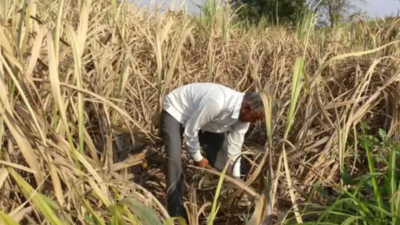
Under the leadership of Chief Minister Yogi Adityanath, the Uttar Pradesh government has delivered tangible relief to farmers long trapped in the complexities of land consolidation. In a significant administrative breakthrough, the consolidation process has been successfully completed in 11 villages spanning eight districts of the state.Simultaneously, decisive steps have been taken to free several other villages from a process that had remained stalled for as long as 12 to 18 years. These measures form part of a broader mission to make agriculture profitable, reduce land disputes, and ensure farmers can fully access the government’s beneficiary-oriented schemes.Land consolidation, or ‘chakbandi’, is a critical reform that regroups fragmented holdings into compact, contiguous plots. When completed efficiently, it lowers cultivation costs, improves irrigation access, reduces boundary conflicts, and enhances overall farm productivity. For years, however, many villages remained stuck in procedural limbo due to river erosion, industrial area notifications, incomplete development plans, factional disputes, or insufficient consolidable area.The Yogi administration has now broken this deadlock through a combination of exclusions under Section 6(1) of the Uttar Pradesh Consolidation of Holdings Act and formal completion under Section 52(1).
Eight districts, eleven villages: Concrete progress on the ground
The recent decisions cover villages across Unnao, Bareilly, Bulandshahr, Banda, Maharajganj, Chitrakoot, Basti and Pratapgarh—precisely the eight districts highlighted in the latest official review.In Unnao district, three villages—Ajgawan, Pidna and Sadabad—had remained under consolidation proceedings for 12 years. Progress was hampered by multiple factors, including work under village development plans and other ground-level constraints. After sustained efforts failed to yield results, these villages were excluded from the consolidation process under Section 6(1). The decision provides long-awaited clarity to landowners who can now move forward without the uncertainty of an unfinished process.Bareilly district’s Magrasa village faced a similar 12-year delay. Here too, administrative review led to exclusion under the same provision, ending a prolonged period of stagnation.Bulandshahr recorded both exclusion and completion. Baral village, stuck for seven years, was excluded after authorities concluded that further progress was not feasible. At the same time, Bhikampur village, where consolidation had been pending for 12 years, saw the process formally completed. This dual outcome underscores the government’s flexible yet firm approach: close cases that cannot proceed and finish those that can.In Banda district, Kajipur (Girwan) village had been under consolidation for two years. Given the limited prospects of timely resolution, it was also excluded under Section 6(1), offering residents a clear path ahead.Maharajganj presents one of the most striking success stories. Baisar village had remained under consolidation for a full 18 years—the longest pending case among those resolved. The process has now been completed under Section 52(1), bringing closure after nearly two decades and allowing farmers to enjoy the benefits of consolidated holdings.Chitrakoot’s Sikri Salis village, pending for 12 years, has likewise seen completion of the consolidation process. In Basti, Auradih village (pending for two years) and in Pratapgarh, Devalha village (also two years) have both been brought to successful conclusion under Section 52(1).Collectively, these 11 villages across the eight districts represent a major clearing of the backlog. Farmers who spent years navigating uncertainty can now secure clear titles, reduce litigation, and focus on productive farming.
Addressing root causes and institutional accountability
The delays were not uniform. Officials identified specific obstacles: ongoing works under village development plans, river erosion reducing available land, consolidable area falling below the 40 percent threshold, inclusion of land within industrial development zones, and persistent factional or group-based disputes. Where these factors made meaningful progress impossible despite special efforts, exclusion was rightly chosen. Where completion was achievable, the process was driven to its logical end.A special campaign scheduled from 15 October to 15 November 2026 has targeted undisputed inheritance and mutation cases. Districts must achieve 100 percent disposal of such cases. Officials will be required to certify that no undisputed inheritance or mutation matter exceeding the prescribed time limit remains pending. Cases that still linger beyond the campaign window will trigger identification of the responsible Consolidation Officer and Consolidator, with reports submitted for further action.Priority has also been ordered for all cases pending for more than three years in consolidation courts. Deputy Directors of Consolidation, Settlement Officers and Consolidation Officers have been instructed to accelerate disposal. Negligence will invite accountability, with responsibility fixed and departmental action proposed as per rules. In addition, officers must inspect their own courts, subordinate consolidation courts, offices and record bundles in accordance with Paragraph 541 of the Uttar Pradesh Consolidation Manual, submitting inspection remarks within 15 days.These measures inject both urgency and accountability into the system. They signal that the government will neither tolerate indefinite pendency nor allow procedural inertia to deny farmers their rights.
Wider impact: owards profitable agriculture
The benefits extend far beyond the 11 villages already resolved. Clear land titles and consolidated holdings enable farmers to access institutional credit more easily, adopt modern farming techniques, and participate fully in schemes for irrigation, soil health, crop insurance and market linkages. Reduced boundary disputes free judicial and administrative bandwidth. Village-level social tensions linked to land fragmentation diminish. Ultimately, the reforms contribute directly to the Yogi government’s stated goal of making agriculture a profitable and dignified occupation.The special campaign on inheritance and mutation cases is particularly significant. Undisputed matters that linger for years create unnecessary hardship for heirs and block subsequent land transactions. Time-bound disposal will restore confidence in the revenue administration and prevent small issues from escalating into larger disputes.
A template for administrative resolve
The recent decisions demonstrate a pragmatic blend of legal flexibility and administrative will. Where the consolidation process had become counterproductive, the government used the statutory power of exclusion. Where completion was feasible, it ensured formal closure. Parallel instructions on inspections, priority disposal and personal accountability create a framework that can be applied statewide.As the special campaign beginning 15 October, attention will shift to the larger volume of pending inheritance, mutation and court cases. The expectation is clear: measurable reduction in backlog, documented certificates of clearance, and consequences for delay. For the farmers of the eight districts already covered—and for thousands more across Uttar Pradesh—the message is one of relief and renewed opportunity.By systematically addressing decades-old bottlenecks in land consolidation, the Yogi government has turned a long-standing administrative challenge into a tangible success story. The completion of the process in 11 villages, the exclusion of several others from fruitless proceedings, and the launch of a focused campaign against pending cases together mark a meaningful step towards secure land rights and profitable agriculture in the state.