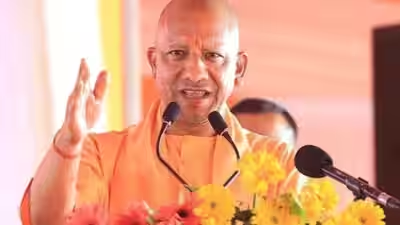













Uttar Pradesh is preparing to take a significant step towards transforming its large youth population into a globally competitive workforce. The state government, led by Chief Minister Yogi Adityanath, has approved the Sardar Vallabhbhai Patel Skill Training and Employment Zone (SVPSTPZ) Development Scheme, an ambitious initiative designed to integrate skill training, industrial requirements and employment opportunities across all 75 districts of the state.With a proposed expenditure of Rs 1,725 crore over three years, the scheme aims to develop Uttar Pradesh into a global manpower hub and a preferred source of skilled workers for industries in India and abroad. The initiative will organise the state’s skill-development and employment ecosystem into nine geographical zones, supported initially by five major training and employment centres.The significance of the decision extends beyond the establishment of training institutions. It represents an effort to build a coordinated system in which young people can acquire market-relevant skills, employers can access trained personnel, and districts can benefit from employment opportunities linked to their economic strengths.For a state with a large workforce, an extensive network of micro, small and medium enterprises (MSMEs), and expanding industrial corridors, the initiative could become an important instrument for linking economic growth with employment generation.
A new model of skill development and employment
The central idea behind the scheme is to move from training-centred programmes towards an integrated system that connects training with actual employment demand. Traditionally, skill-development initiatives have often faced the challenge of ensuring that the courses offered match the requirements of employers. A person may complete a vocational course but still struggle to find work if the training does not correspond to the technologies, standards and practical competencies required by industry.The new scheme seeks to address this gap by bringing together training providers, industrial establishments, employment agencies, government departments and industrial development authorities within a coordinated framework.Under the proposed arrangement, the skill requirements of different industries and regional economies will be assessed, and training will be designed around those needs. The objective is to make young people more employable while helping enterprises find workers with the appropriate technical and professional competencies.The initiative also seeks to expand the geographical reach of skill development. Instead of concentrating opportunities in a few major cities, the nine-zone framework will connect all 75 districts to a broader network of training and employment services.This is particularly relevant for young people in smaller towns and rural areas, where access to specialised vocational training and placement networks may be more limited.
The Rs 1725-crore investment
The state government has estimated expenditure of ?1,725 crore over the next three years for the scheme. This is the announced project outlay; it should not be confused with an amount already spent or a separate annual budget allocation.The proposed investment will support the development and operation of skill-training and employment centres, training infrastructure, industry-linked programmes, institutional coordination and technology-enabled monitoring.This scheme also provides for viability gap funding (VGF), where necessary, to support private developers and training providers. Such assistance can help make projects financially viable when the expected revenue from operating them is insufficient to cover their costs.The centres may be developed and operated either through public-private partnerships, including the Design, Build, Finance, Operate and Transfer (DBFOT) model, or through government institutions. This allows the state to draw upon private-sector investment and expertise while retaining a role in planning, oversight and quality monitoring.The long-term value of the investment will depend on how effectively funds are translated into functioning infrastructure, high-quality courses, employer partnerships and verifiable employment outcomes.Five major centres to anchor the statewide networkThe first phase will establish five major skill-training and employment centres at strategic locations. These centres are expected to serve as the principal hubs of the wider nine-zone network.
The proposed locations and institutional arrangements are:
- Lucknow: A centre to be established by the MSME Department.
- Kanpur: A centre to be developed under the public-private partnership (PPP) model.
- Gorakhpur: A centre to be established through the Gorakhpur Industrial Development Authority (GIDA).
- Gautam Buddha Nagar: A centre involving the combined support of the Noida, Greater Noida and Yamuna Expressway Industrial Development Authorities.
- Jhansi: A centre to be established through the Bundelkhand Industrial Development Authority (BIDA).
- Each centre will require approximately 10–25 acres of suitable, encumbrance-free land. The plan also provides for four-lane road connectivity from a nearby highway or expressway within two years, improving accessibility for trainees and facilitating links with industrial areas.
The selection of these locations reflects the diversity of Uttar Pradesh’s economy. Gautam Buddha Nagar and its adjoining areas have a strong presence in electronics, IT, manufacturing and services. Kanpur has a legacy of manufacturing and industrial activity, while Lucknow is an administrative, educational and emerging technology centre. Gorakhpur is an important industrial growth centre in eastern Uttar Pradesh, and Jhansi is positioned to benefit from the development of the Bundelkhand Industrial Development Authority region.By establishing hubs in different parts of the state, the government intends to create a network that responds to regional employment opportunities rather than relying on a uniform training model for every district.
Nine zones covering all 75 districts
A defining feature of the scheme is the division of Uttar Pradesh into nine skill-development and employment zones. The zones will bring together districts and divisions with related industrial, commercial and labour-market characteristics.
The proposed geographical structure is as follows:
- Zone 1: Gautam Buddha Nagar, Ghaziabad and Hapur.
- Zone 2: Saharanpur division, along with Bulandshahr, Baghpat and Meerut.
- Zone 3: Moradabad and Bareilly divisions.
- Zone 4: Agra and Aligarh divisions.
- Zone 5: Lucknow and Ayodhya divisions.
- Zone 6: Kanpur and Prayagraj divisions.
- Zone 7: Chitrakoot, Vindhyachal and Jhansi divisions.
- Zone 8: Varanasi and Azamgarh divisions.
- Zone 9: Gorakhpur, Basti and Devipatan divisions.
The zonal approach could help identify the skills most relevant to each region. For example, western Uttar Pradesh can draw upon opportunities in electronics, logistics, manufacturing and information technology. The Moradabad and Aligarh regions can benefit from training related to handicrafts, metal products, locks and other manufacturing activities. The Varanasi, Bhadohi and Mirzapur belt has opportunities in textiles, carpets, handicrafts and tourism, while Bundelkhand’s industrial development could generate demand for technical trades, construction, engineering and equipment maintenance.These are potential applications of the regional approach, rather than a published, final list of courses for each zone. The success of the model will depend on the detailed assessment of employers’ requirements in every region.
Training for a changing industrial economy
The scheme envisages training for both technical and non-technical candidates, recognising that the employment market requires a diverse range of competencies. Young people with backgrounds in humanities, commerce and other non-technical subjects will be able to access foundational skill training. Those with qualifications from Industrial Training Institutes (ITIs), polytechnics and engineering institutions will be able to pursue technical upskilling.The objective is to help candidates move from general educational qualifications to practical workplace capabilities. Depending on employer demand, training could cover manufacturing processes, machinery operation, industrial maintenance, quality control, logistics, digital applications and other occupational skills.A particularly important provision is language training. The scheme proposes instruction in relevant Indian and foreign languages according to employment opportunities in other states and overseas markets. This could help candidates prepare for jobs in locations where communication skills and familiarity with local workplace practices are essential.Language training, however, must be accompanied by occupational competence, recognised certifications and an understanding of workplace safety and employment regulations. These elements will be critical if the state wants its trained workers to compete successfully in international labour markets.The proposed centres will also have hostel facilities, employment offices and placement cells on their campuses. The government plans to coordinate with established recruitment and placement agencies operating in India and abroad to connect trained candidates with employment opportunities.
How the scheme could benefit Uttar Pradesh
First, it can improve the transition from education to employment. By linking training to employer requirements, the scheme could reduce the mismatch between the qualifications young people acquire and the skills businesses actually need. Placement support would give candidates a more direct route from training to job applications and recruitment.Second, it can strengthen the state’s industrial competitiveness. Manufacturers and service providers need reliable access to workers with relevant skills. A coordinated training network could help reduce recruitment difficulties, shorten the time required to train new employees and support the expansion of existing enterprises.This is especially important for MSMEs, which often have fewer resources than large companies to conduct extensive in-house training. A readily accessible pool of trained workers could help small businesses improve productivity, adopt modern technologies and expand operations.Third, the scheme could support more balanced regional development. The nine-zone model creates a framework for identifying opportunities beyond the major metropolitan centres. If training programmes are linked to emerging industrial clusters and local enterprises, young people could gain better access to jobs closer to home. Others could use the same training and placement network to pursue opportunities elsewhere in India or overseas.Fourth, it could improve access to international employment. Technical competence, language proficiency, recognised qualifications and professional recruitment support can make workers better prepared for overseas opportunities. The proposed system could also help candidates obtain clearer information about job requirements and the recruitment process.International placements will require appropriate safeguards, including verified employers, transparent contracts, fair recruitment charges and compliance with the relevant laws. Such protections are essential to ensure that the pursuit of overseas employment benefits workers as well as the state.Fifth, it could create a stronger skills ecosystem. The collaboration of government departments, industrial development authorities, training providers and employers could encourage investment in specialised training. Digital monitoring could help identify which courses generate employment and which need improvement.
Digital monitoring and accountability
The scheme provides for coordination and monitoring at the state, district and project levels. A digital dashboard, data analysis and artificial-intelligence-based technological facilities are envisaged to improve the monitoring of infrastructure, financial management, training quality and employment-related activities. A suitable technology partner is to be selected for this purpose.Such systems could help track enrolment, attendance, course completion, assessments, placement offers and employment retention. They could also help authorities compare demand for different occupations across the nine zones.For the investment to produce measurable results, monitoring should go beyond counting trainees or issuing certificates. Important indicators would include the proportion of trainees placed in jobs, wages earned, retention after six or twelve months, employer satisfaction and the number of candidates obtaining relevant professional certifications.Transparent reporting of these outcomes would enable the government to direct resources towards programmes that demonstrate genuine employment value.
A strategic opportunity for MSMEs and investment
The scheme has particular relevance for Uttar Pradesh’s MSME sector. The GNT report accompanying the cabinet decision cited approximately 96 lakh MSME enterprises in the state, accounting for about 14.2% of the country’s total, with more than three crore people working in the sector. It also reported that MSMEs contribute substantially to the state’s industrial production and exports.These figures illustrate why workforce development matters to the state’s economic ambitions. Even as large manufacturing projects, expressways, industrial parks and technology investments expand, their benefits depend partly on the availability of people who can operate equipment, maintain production lines, manage supply chains and provide specialised services.A coordinated skills network could help MSMEs access training resources that individual businesses might find difficult to establish independently. It could also support the development of new enterprises by making trained workers available in emerging industrial locations.Nevertheless, training infrastructure alone cannot guarantee jobs. Placement outcomes will depend on sustained investment, demand from employers, the quality of instruction and the ability of training providers to adapt quickly as technologies change.
The future course
The Sardar Vallabhbhai Patel Skill Training and Employment Zone Development Scheme is an attempt to bring together three elements of economic development: a skilled workforce, industrial demand and access to employment.Its proposed three-year outlay of ?1,725 crore, five initial centres and nine-zone structure provide the institutional framework for this ambition. The emphasis on technical upskilling, languages, hostels, placement facilities, private-sector participation and digital monitoring could help create a more coordinated approach to workforce development.The next challenge will be implementation: establishing the centres on schedule, identifying genuine employer demand, ensuring that courses meet industry standards and building reliable placement partnerships.If these elements are delivered effectively, the initiative could help Uttar Pradesh turn its demographic scale into an economic advantage. More young people could gain access to productive employment, MSMEs could obtain better-trained workers, and industries could draw upon a larger and more capable talent pool.Ultimately, the success of the scheme will be measured not by the number of centres built or candidates trained alone, but by the quality of jobs secured, the improvement in workers’ earnings and the contribution of skilled manpower to Uttar Pradesh’s long-term economic growth.