









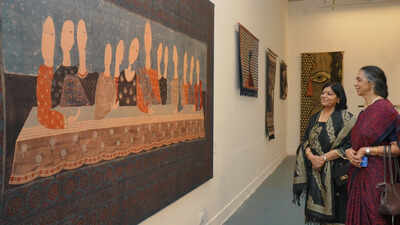
Indigo was once called “blue gold,” a commodity that built fortunes across continents and carried histories of forced labour, displacement, and resistance. Artist Shelly Jyoti’s exhibition Indigo: The Blue Gold II (2008–2026), now on view at Bikaner House in New Delhi, follows those histories across eighteen years of practice.
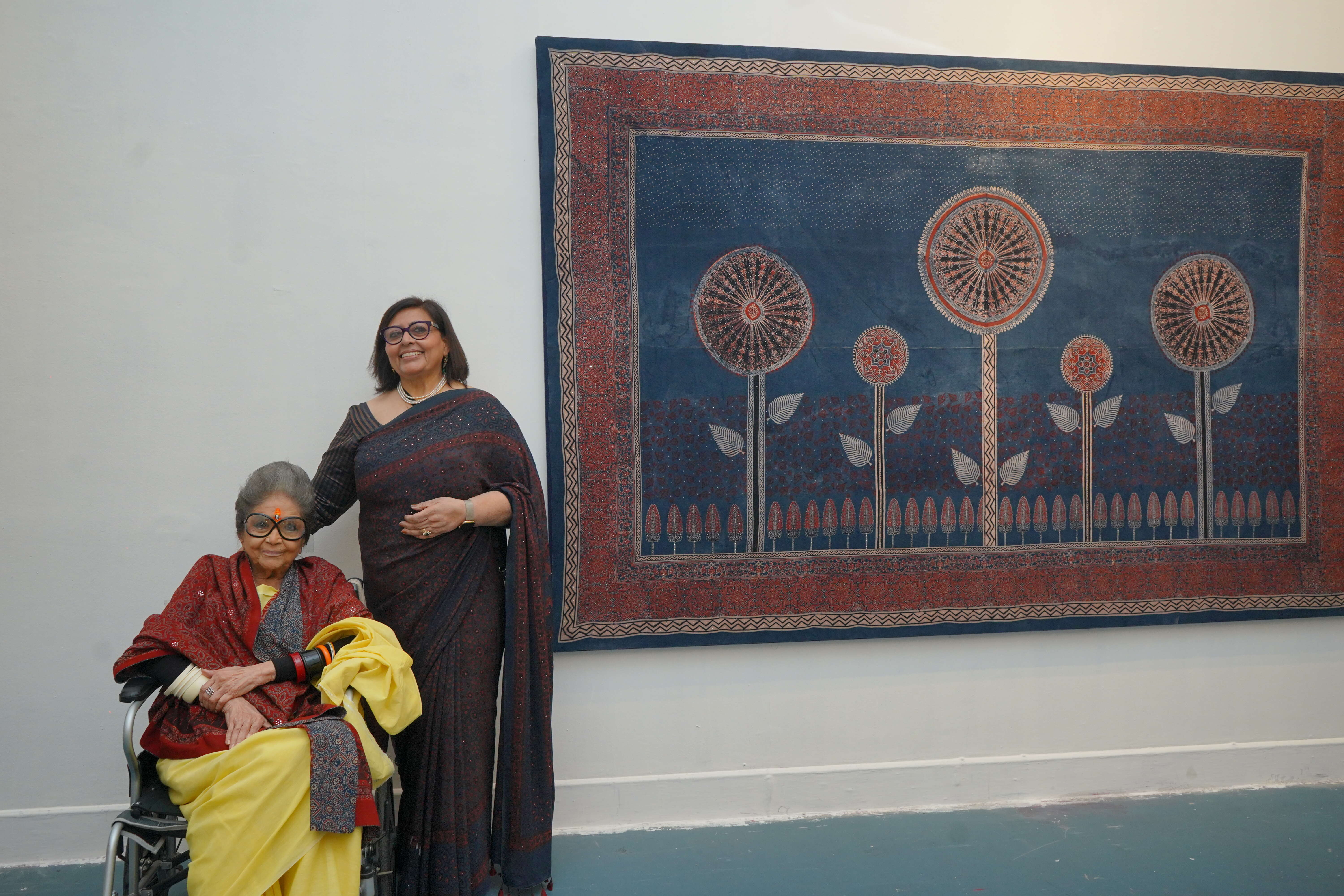
Tara Gandhi Bhattacharjee (Chairperson, National Gandhi Museum) with Artist Shelly Jyoti
Curated by Lisa Trivedi, Professor of History at Hamilton College, New York, the show moves from ancient textile traditions and colonial plantations to the stories of migration and cultural renewal that followed. Good Earth Heritage Foundation is the Patron Partner, and the Indira Gandhi National Centre for the Arts (IGNCA) is the Knowledge Partner.
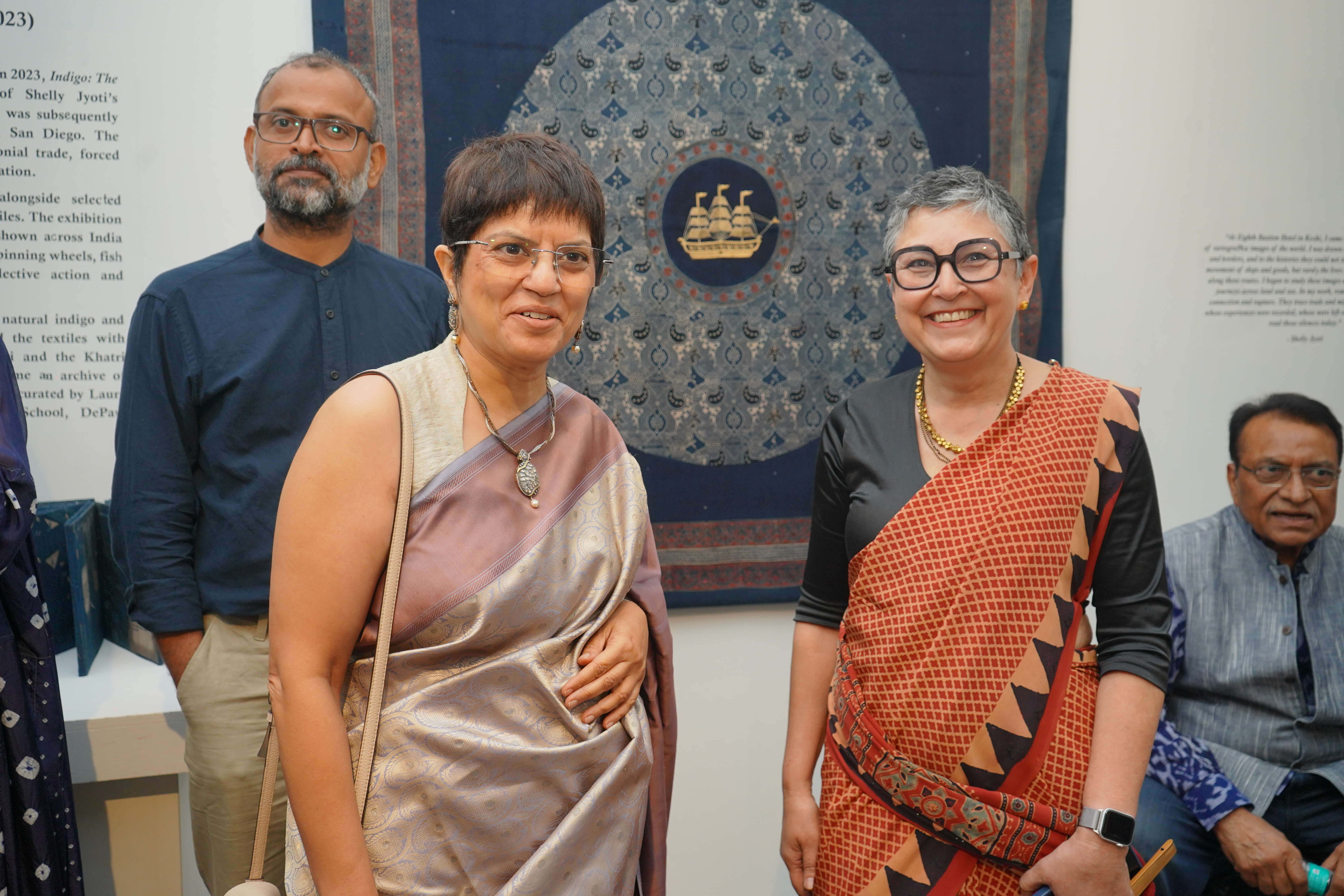
Anuradha Kumra with Curator Prof. Lisa Trivedi
From Champaran to the worldJyoti’s early work examined indigo cultivation in India, the exploitation of farmers, and Mahatma Gandhi’s Champaran Satyagraha. Her inquiry later widened to indigo’s global circulation, linking colonial trade with slavery, indentured labour, and the displacement of communities across continents. Through this body of work, she considers how historical experience continues to shape contemporary identity and collective memory.
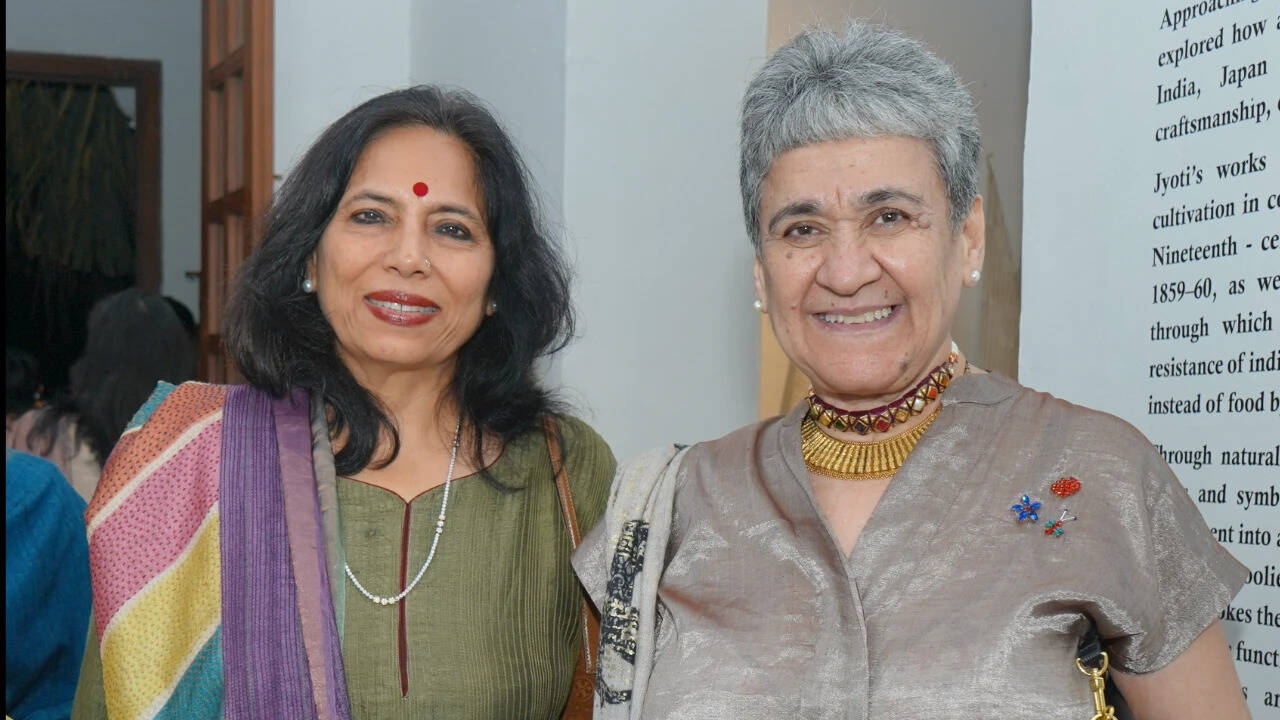
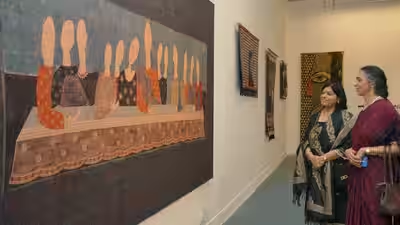
Abha Singh & Ratan Kaul
Migration Through TimeThe new work at the centre of the exhibition, Indigo: Migration Through Time, unfolds in three movements. Faceless Journeys honours enslaved, indentured, and migrant workers whose lives are often missing from written history. Displaced Ecologies uses seeds, roots, and trees as metaphors for communities that adapt to unfamiliar land while carrying their traditions with them. Unresolved Geographies dissolves the boundaries between body, landscape, and movement, treating indigo as a field of memory.Jyoti works with hand-spun khadi, natural indigo dyeing, Ajrakh block printing, embroidery, and mirror work, often in close collaboration with Ajrakh master artisans of Kutch. Recurring motifs of ships, charkhas, fish, globes, faceless figures, and seeds connect personal histories to wider movements of people and knowledge. In her own words, migration is not only the movement of bodies but also “the passage of memory, cultural knowledge and identity across generations.”
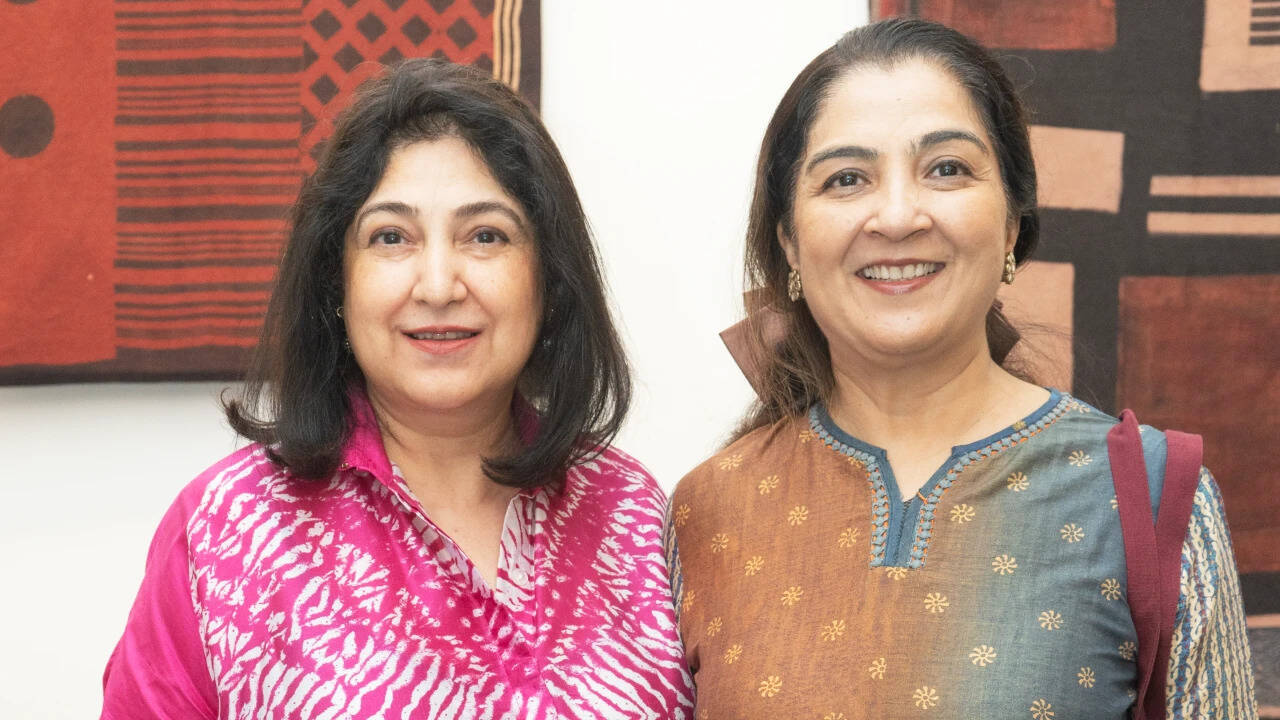
Rachna with Princess Anjanaraje Gaekwad
The opening of the exhibition, which is on view till Sunday, drew Tara Gandhi Bhattacharjee, Chairperson of the National Gandhi Museum, as chief guest, along with Shubhangini Raje Gaekwad, Chancellor of The Maharaja Sayajirao University of Baroda, and figures from Delhi’s art, cultural, and diplomatic circles, including Anuradha Kumra, Sushma Bhal, Ratan Kaul, Sudha Dhingra, Anjanaraje Gaekwad, and Abha Singh.