








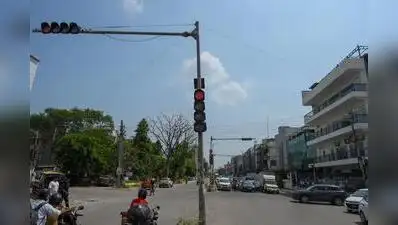
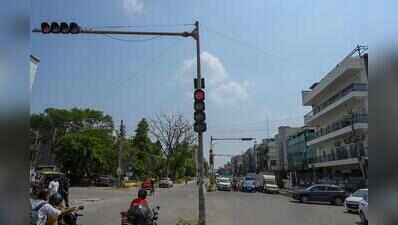
Gurgaon: The city is set to get 15 more smart traffic signals, even as questions remain over the effectiveness of the existing Adaptive Traffic Control System (ATCS), with signals at several junctions still running on preset timings instead of adjusting dynamically to traffic flow.The new signals are being planned on fresh requirements raised by police. According to GMDA, eight locations have been identified so far, including near Vatika India Next, Paras Hospital, Sikanderpur Bada, Civil Lines and Almeda Chowk on Southern Peripheral Road (SPR). The project covers 15 locations to accommodate further requirements as they arise and is estimated to cost around Rs 3 crore.“The new traffic signals are being planned in response to the requirements raised by the police. These signals will be equipped with ATCS, which will allow us to monitor traffic movement from the control room and change signal timings remotely,” a GMDA official said. Conventional signals, the official added, offer limited monitoring capabilities, whereas ATCS lets officials track traffic conditions and modify timings remotely as required. ATCS will be activated wherever feasible.The expansion comes amid concerns over the existing network. ATCS is designed to vary green-light durations according to the volume of vehicles at a junction. Yet commuters continue to face long queues at several busy intersections, sometimes waiting through three to four signal cycles to cross.The city currently has 141 junctions under ATCS: 109 in Phase I and 32 in Phase II, set up at a cost of more than Rs 24 crore. TOI had earlier reported that signals at several locations continued to run on preset timings, limiting the system’s ability to respond to changing traffic conditions.Officials had said that heavy, continuous traffic during the day limits the system’s ability to adjust timings effectively, which is why preset timings are used at several junctions. Adaptive operation is more feasible in the evening and at night, when traffic thins out. Traffic police can also step in remotely to revise timings based on traffic counts.