










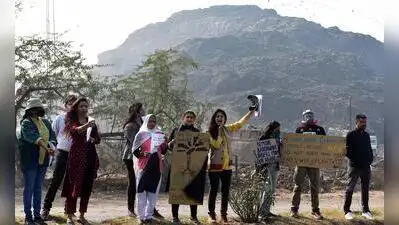
Gurgaon: Haryana’s plan to set up a 2,000-tonne-per-day waste-to-energy (WTE) plant at Kasan village in Manesar has come under scrutiny after a study found that electricity generated by Delhi’s four operating incinerators carries a fossil-carbon footprint around 4.7 times the national grid average.The study, released on Thursday by National Alliance for Climate and Ecological Justice (NACEJ) and Centre for Financial Accountability (CFA), estimated that Delhi’s plants emit 3.42kg of fossil-origin carbon dioxide (CO2) per kilowatt-hour of net electricity exported. Central Electricity Authority’s weighted-average grid emission factor is 0.727kg per kWh.The study does not assess Haryana’s proposed plants or estimate their future emissions. However, its findings raise questions about the climate implications of expanding incineration as the city struggles with its waste-management challenges.In Aug, Haryana govt announced four integrated WTE plants with a combined capacity of 5,000 tonnes a day and proposed electricity generation of 50MW. The Gurgaon plant, the largest, is planned to process 2,000 tonnes a day and generate at least 20MW. The other three are planned for Faridabad, Ambala and Hisar, with capacities of 1,600, 900 and 500 tonnes a day, respectively. All are expected to become operational by Oct 2028. The state plans to use biodegradable waste to produce compressed biogas, and non-recyclable combustible dry waste to generate electricity.According to the Delhi study, the four plants processed 7,35,840 tonnes of plastic in 2023, about 42% of their refuse-derived fuel feed by mass. Burning it released an estimated 2.1 million tonnes of fossil-origin CO2, equivalent to the annual emissions of about 1.44 million cars. The plants exported an estimated 198kWh of net electricity per tonne of raw municipal waste processed, supplying less than 1.5% of Delhi’s total electricity demand.The authors clarified that their estimate covers CO2 from burning plastic alone, not all emissions from the plants’ chimneys or their full life cycle. Including emissions from both fossil-derived and biodegradable waste could substantially increase the total, potentially to around twice the fossil-origin figure.The report also flags India’s Extended Producer Responsibility framework, which allows recognised plastic waste processors, including WTE incinerators, to generate certificates for the quantities of plastic they burn. The authors argue this could reward combustion instead of encouraging plastic reduction, reuse and recycling.“Burning mixed waste in a WTE facility is a clear violation of Solid Waste Management Rules, 2026,” said Siddharth Ghanshyam Singh of Centre for Science and Environment, arguing that the rules place energy recovery through incineration at the bottom of the waste hierarchy.“The landfill, with its recurring fires and leachate threatening groundwater and Aravalis, is a stark reminder of the crisis we are creating,” said Anuradha P Dhawan of Aravali Bachao Citizens Movement, describing the landfill as a reflection of excessive consumption and the disconnect between what cities consume and the waste they generate.Bhavreen Kandhari of Warrior Moms questioned the expansion of incineration as a waste-management strategy. “Across India we have several WTE plants. We don’t need more such plants. These plants are incinerating thousands of tonnes of mixed waste every day, including valuable plastics, to generate limited electricity at a significant fossil carbon cost,” she told TOI.“We need to strengthen segregation, waste prevention, reuse, recycling and decentralised composting,” she added.The report calls for excluding municipal-waste incineration from climate finance, ending carbon credits for such projects and removing incentives that reward plastic combustion. It recommends prioritising waste prevention, recycling, biological treatment and the integration of waste workers into waste-management systems.The Kasan project follows several failed attempts to set up a WTE facility at Bandhwari landfill. The foundation stone for a plant there was laid in Dec 2021, but the project failed to take off, and the agreement with concessionaire Ecogreen was terminated in 2024. A later proposal involving NTPC Vidyut Vyapar Nigam Ltd and the municipal corporations of Gurgaon and Faridabad envisaged WTE projects costing Rs 500 crore each. Plans then shifted to a waste-to-charcoal facility at Bandhwari, which was shelved in 2025.MCG then pursued the Kasan facility to process fresh municipal waste and reduce pressure on Bandhwari, which reportedly holds 16 lakh to 17 lakh tonnes of legacy waste. TOI reported in July that MCG had taken possession of 10 acres at Kasan and was beginning to fence another 10-acre parcel for the proposed 20-acre project.“We have got the possession of the entire 20 acres of land and have fenced it using barbed wires. It is an integrated project of the MCG and MCM,” an MCM official, privy to the matter, told TOI.