








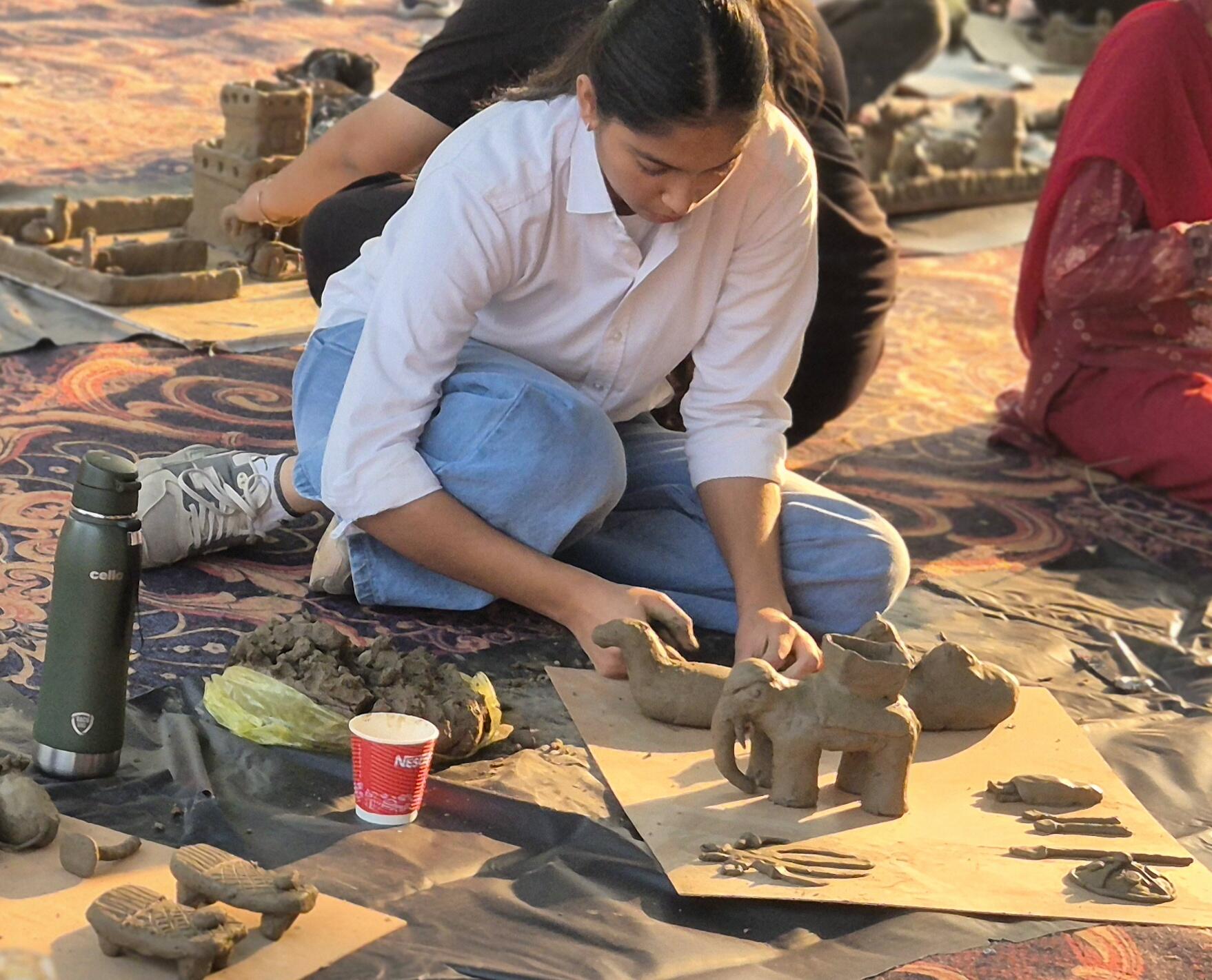
Ludhiana: From crafting clay toys and traditional weaving to poetry recitations and idiom-rich debates, students showcased Punjab’s rich rural heritage on the second day of the ongoing youth festival at Punjab Agricultural University (PAU).The day’s heritage displays featured miniature models of rural life—complete with traditional hearths, hand-mills chakki, wells, cots, cooking utensils, and clay figures of livestock. Events like mitti de khidaune (clay toys), crochet, chhiku making, innu making, and peerhi making provided participants hands-on experience with fading traditional crafts.Competitions extended to literary and oral traditions, including muhavredar vartalaap, where students incorporated rare Punjabi idioms into everyday dialogue, and kavishri, featuring poetic recitations on Maharaja Ranjit Singh’s reign, Punjab’s landscape, and the freedom struggle.Judges, including Prabhleen Kaur of Sri Guru Gobind Singh College, Chandigarh, praised the participants’ creativity and concentration, noting that such interactive activities encourage the younger generation to take pride in preserving their cultural roots against modern technological distractions.Participants across PAU constituent colleges actively engaged in the contests. Arshpreet Kaur from the College of Agricultural Engineering and Technology displayed traditional kitchen setups, while Mehakpreet from the College of Horticulture demonstrated crochet techniques.Reflecting on her experience in peerhi making, a student from the College of Agriculture, Ballowal Saunkhri campus, said: “While learning to weave the peerhi, I realised what a joy it is to create one. Watching the beautiful colours come together and seeing a pattern emerge was an altogether different experience. One cannot truly appreciate the beauty of handmade products unless one makes them or watches the process closely. Such joy of creation is missing in machine-made products.”Audience members and participants echoed the sentiment, emphasizing that providing platforms to practice traditional skills, linguistic nuances, and historical storytelling remains crucial for keeping Punjab’s cultural identity alive.